🇪🇸 SpainCatalog recipe
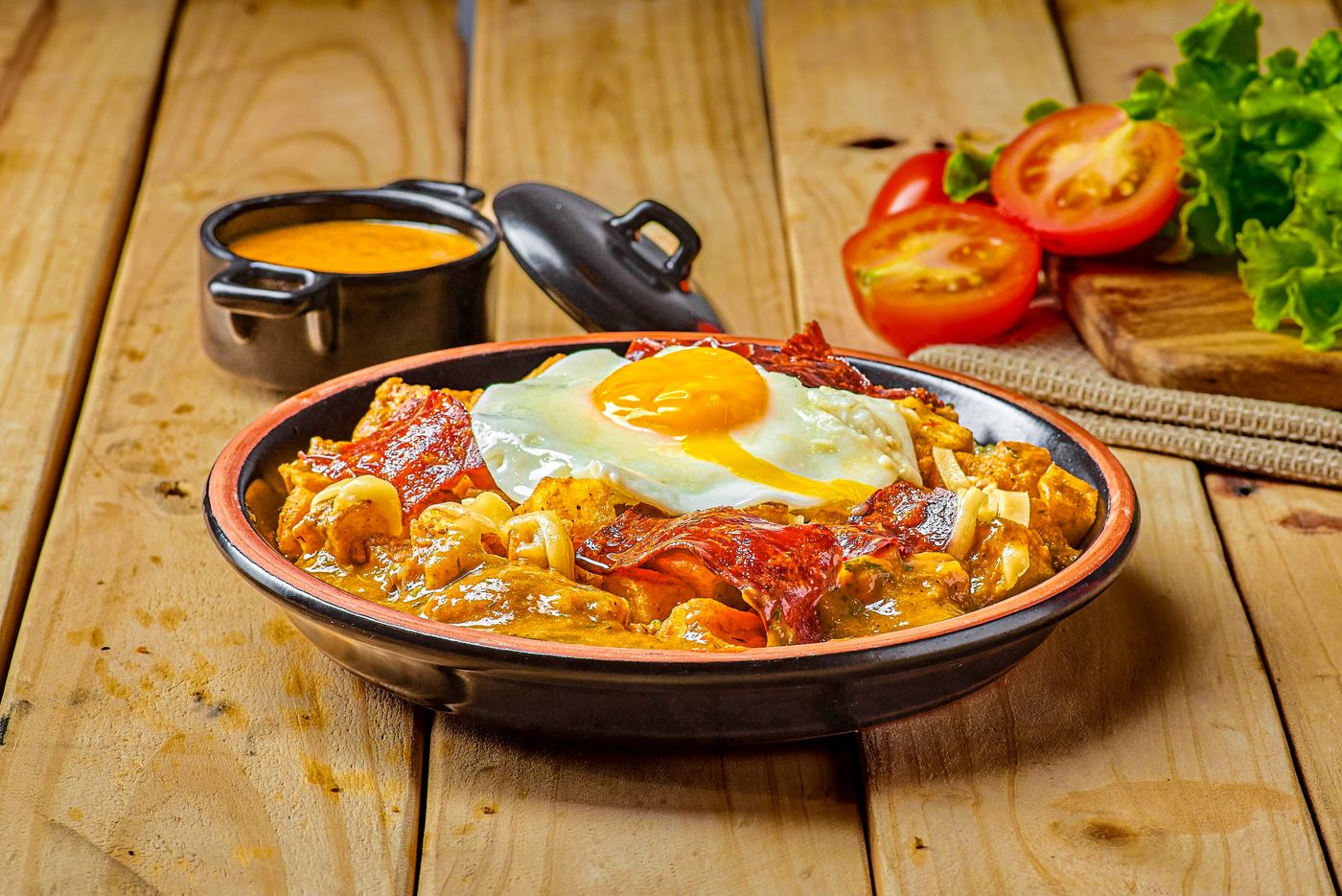
Steamed white rice topped with a crisp-edged fried egg and a garlicky tomato sauce spooned alongside — the plate every Spanish kid grows up ordering.
How hard is it
On the table in 25 minutes.
One moment where you are juggling two things at once.
For 4 servings.
No reviews yet
Cooked this? Be the first to tell everyone how it went.
Sign in to rate and review this recipe.
Sign in to suggest corrections and improvements.
Community posts are opinions, not professional advice. Community guidelines
Videos belong to their creators and play on their platform’s terms — Cibora never re-hosts third-party video.
Buy these ingredients
Links open each store’s own site, where you see their live local prices. Our cost figures in the app are estimates only.
Cook the rice in salted water according to the package until tender, about 15 minutes; keep warm and fluff with a fork.
Meanwhile, warm 1 tablespoon of the olive oil and soften the onion and garlic, about 5 minutes.
Add the crushed tomato and sugar, and simmer until thickened into a loose sauce, about 8 minutes.
💡 The pinch of sugar tames canned tomato's sharp edge — a quiet trick behind every good version of this sauce.
Season the sauce with salt and keep it warm.
Heat the remaining olive oil in a skillet and fry the eggs until the edges turn lacy and brown but the yolks stay runny, about 3 minutes.
Mound the rice on plates, top each with a fried egg, and spoon the tomato sauce alongside — not over — the egg.
Despite its name, arroz a la cubana is far more a fixture of Spanish home and cafeteria menus than of Cuban home cooking, its exact origin blurred by colonial-era exchange between the two. It remains one of the cheapest, fastest plates on any Spanish menú del día, and usually one of the first dishes kids learn to ask for by name.
No suggestions yet. Spotted a wrong quantity, a missing step, or a better technique? Suggest it — accepted changes join the recipe’s version history.
Sign in to join the discussion. Reading is open to everyone.
Nothing here yet — questions about technique, timing, and substitutions all welcome.