🇵🇪 PeruCatalog recipe
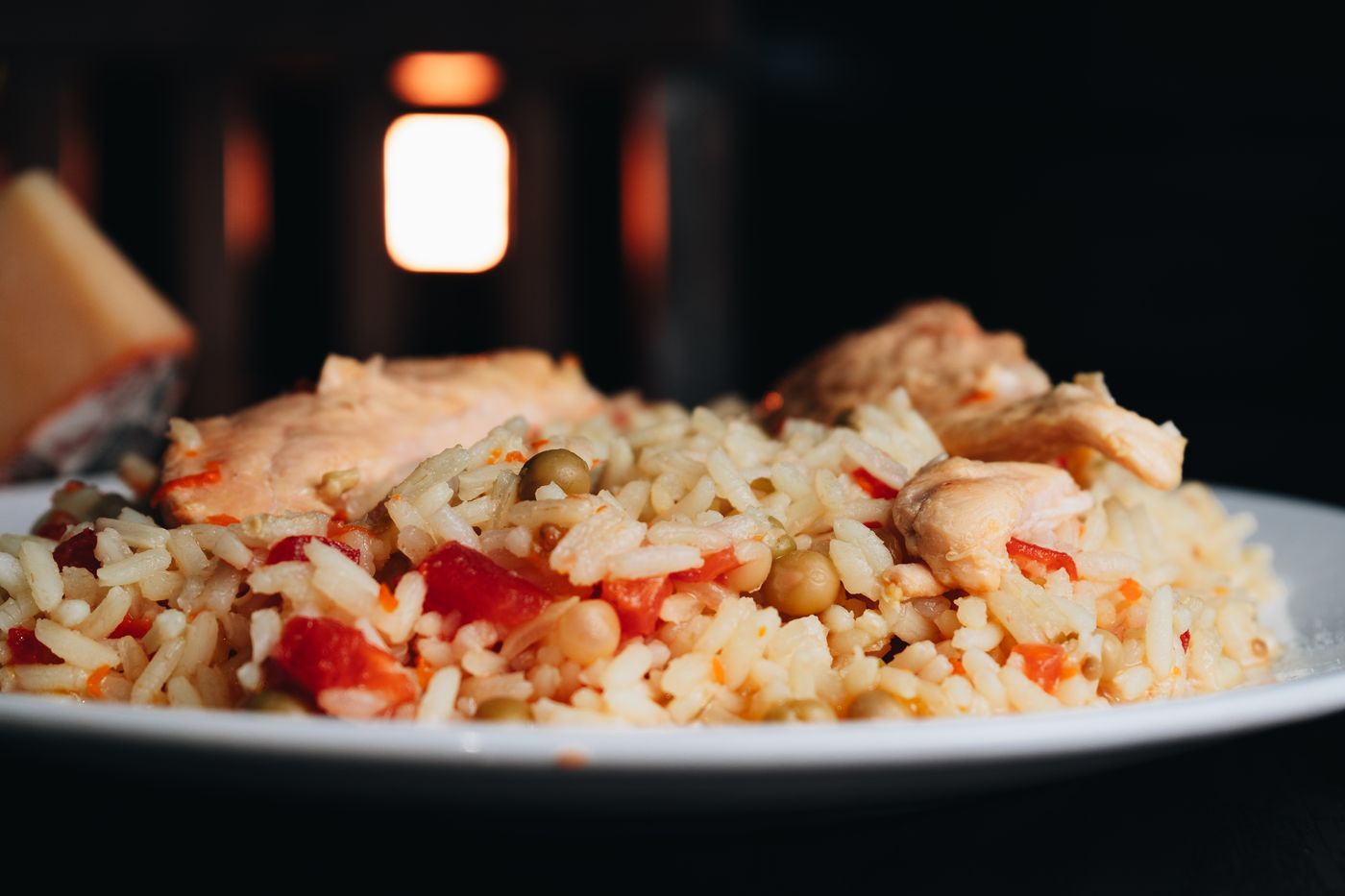
Chicken thighs braised into cilantro-blitzed rice with carrot and bell pepper until the grains turn a deep, herby green — the one-pot Sunday dinner, sped up for a Tuesday.
For 4 servings.
No reviews yet
Cooked this? Be the first to tell everyone how it went.
Sign in to rate and review this recipe.
Sign in to suggest corrections and improvements.
Community posts are opinions, not professional advice. Community guidelines
Videos belong to their creators and play on their platform’s terms — Cibora never re-hosts third-party video.
Buy these ingredients
Links open each store’s own site, where you see their live local prices. Our cost figures in the app are estimates only.
Blend the cilantro, garlic and 100ml of the chicken stock until smooth and bright green; set aside.
Season the chicken chunks with salt and pepper. Heat the oil in a large pot and brown them over medium-high heat, about 5 minutes; remove.
In the same pot, soften the onion, carrot and bell pepper for 5 minutes, then stir in the aji amarillo paste and cook 1 minute more.
Add the rice and stir 1 minute to coat every grain in the sofrito.
Pour in the cilantro purée and the remaining hot stock, return the chicken to the pot, and bring to a boil.
Cover, drop to the lowest simmer, and cook undisturbed for 18 minutes, until the rice is tender and the liquid is absorbed.
💡 Resist lifting the lid — Peruvian arroz con pollo steams as much as it simmers.
Rest off the heat, covered, for 5 minutes, then fluff with a fork and serve.
Peruvian arroz con pollo takes its color from a blended cilantro-and-garlic base rather than the tomato or saffron used elsewhere in Latin America, a habit that reflects how heavily Peruvian cooking leans on fresh cilantro. Families traditionally simmer a whole cut-up chicken for a slow Sunday lunch; this version uses boneless thighs so the whole pot comes together on a weeknight.
No suggestions yet. Spotted a wrong quantity, a missing step, or a better technique? Suggest it — accepted changes join the recipe’s version history.
Sign in to join the discussion. Reading is open to everyone.
Nothing here yet — questions about technique, timing, and substitutions all welcome.