🇮🇱 IsraelCatalog recipe · Jerusalem
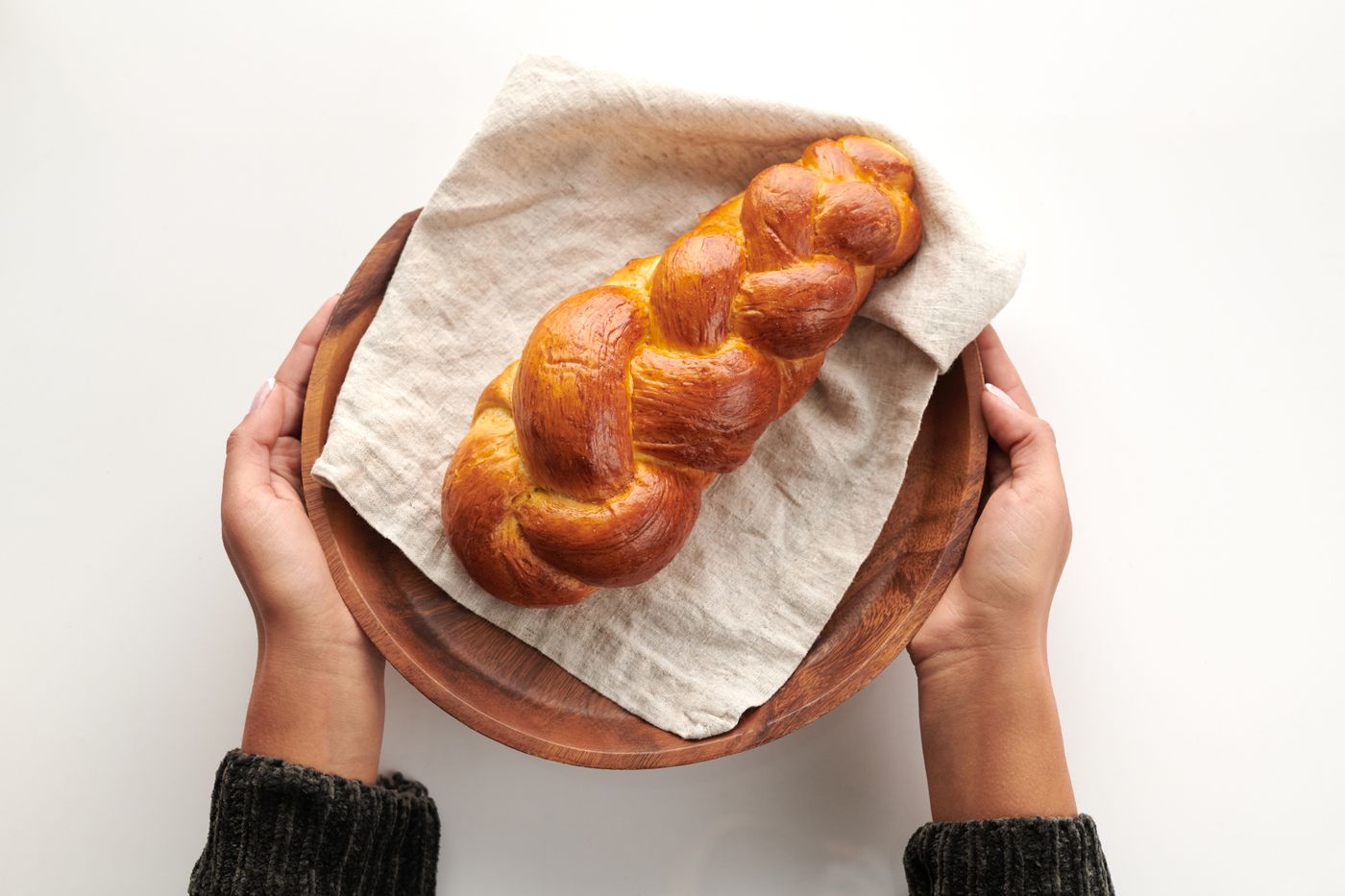
Glossy, egg-rich bread braided into rope loaves, brushed twice with egg yolk and baked until the sesame-flecked crust turns deep mahogany.
For 10 servings.
No reviews yet
Cooked this? Be the first to tell everyone how it went.
Sign in to rate and review this recipe.
Sign in to suggest corrections and improvements.
Community posts are opinions, not professional advice. Community guidelines
Videos belong to their creators and play on their platform’s terms — Cibora never re-hosts third-party video.
Buy these ingredients
Links open each store’s own site, where you see their live local prices. Our cost figures in the app are estimates only.
Dissolve the yeast and a pinch of sugar in the lukewarm water and let it foam, about 10 minutes.
Whisk in the 2 eggs, 1 egg yolk, remaining sugar, oil and salt, then work in the flour to form a soft, slightly tacky dough.
Knead until smooth and elastic, about 10 minutes by hand, then cover and let rise until doubled, about 1.5 hours.
💡 Warm, draft-free spots — inside a turned-off oven with the light on works well — cut the rise time noticeably.
Punch down the dough, divide into strands, and braid into one or two loaves.
Cover loosely and let rise again until puffy, about 45 minutes.
Brush generously with the remaining beaten egg yolk, then scatter sesame seeds over the top.
💡 A second egg wash halfway through baking gives the deepest, glossiest crust.
Bake at 180°C for 28-32 minutes until deep golden and hollow-sounding when tapped underneath.
Cool on a rack at least 20 minutes before slicing or tearing.
Challah is baked fresh every week for the Sabbath table, its braids meant to recall bundles of manna, and two loaves are traditionally set out to mark the double portion said to have fallen before the day of rest. The dough is Ashkenazi in origin, sweetened with a little sugar and enriched with eggs and oil rather than butter, so it can sit beside a meat meal under Jewish dietary law. Breaking the first piece by hand rather than cutting it is still how many families start the meal.
No suggestions yet. Spotted a wrong quantity, a missing step, or a better technique? Suggest it — accepted changes join the recipe’s version history.
Sign in to join the discussion. Reading is open to everyone.
Nothing here yet — questions about technique, timing, and substitutions all welcome.