🇨🇳 ChinaCatalog recipe
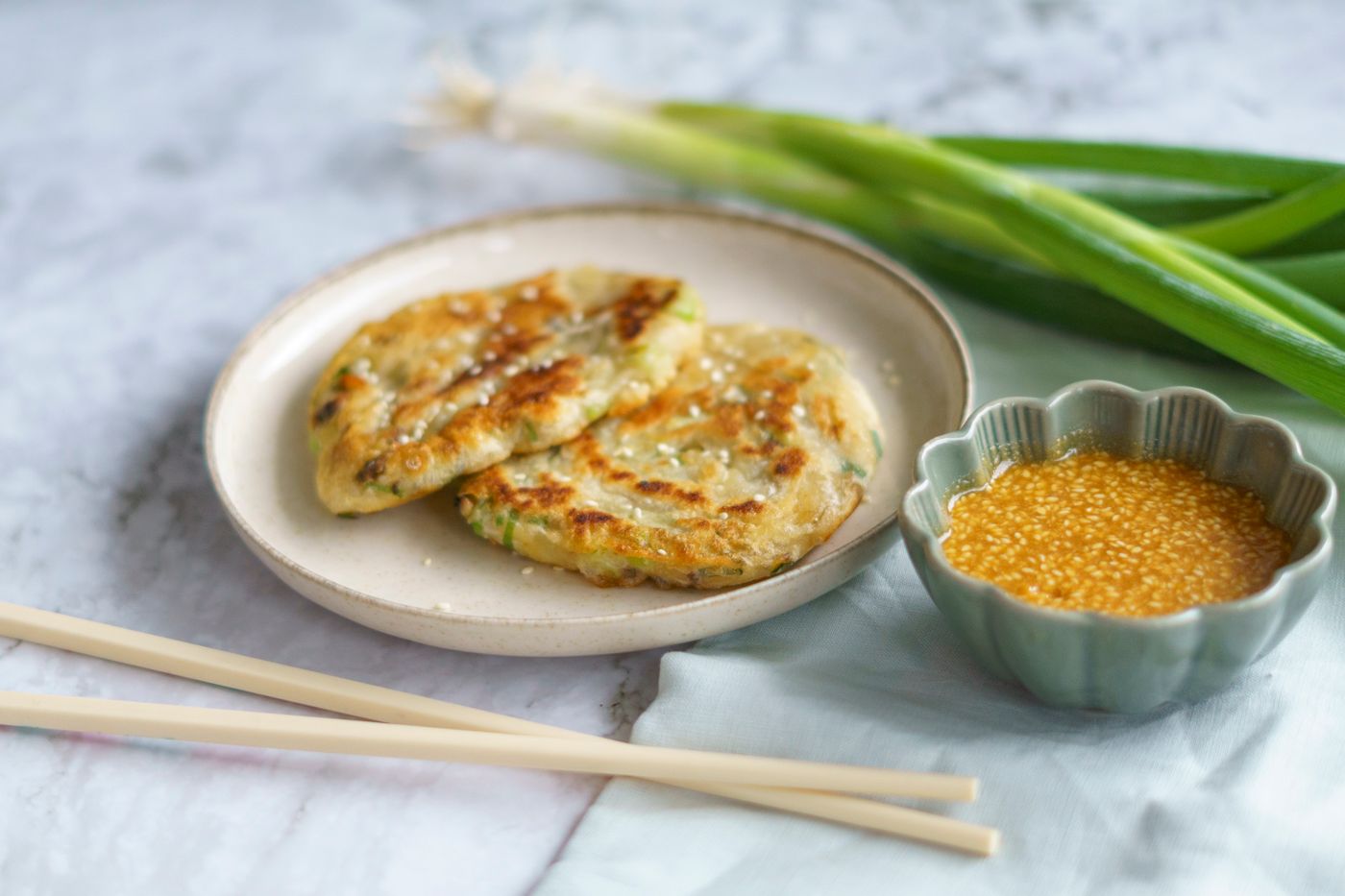
Shatteringly crisp, many-layered flatbreads coiled with scallions and toasted in a hot pan until golden and flaky.
For 4 servings.
Buy these ingredients
Links open each store’s own site, where you see their live local prices. Our cost figures in the app are estimates only.
No reviews yet
Cooked this? Be the first to tell everyone how it went.
Sign in to rate and review this recipe.
Sign in to suggest corrections and improvements.
Community posts are opinions, not professional advice. Community guidelines
Videos belong to their creators and play on their platform’s terms — Cibora never re-hosts third-party video.
Stir the hot water into the flour with chopsticks, then knead briefly into a soft, smooth dough. Cover and rest 20 minutes.
💡 Hot-water dough is what makes the pancakes tender inside — cold water gives you cardboard.
Mix 2 tablespoons of vegetable oil with the sesame oil and a spoonful of flour to make a loose paste.
Divide the dough in four. Roll one piece into a thin rectangle, brush with the oil paste, season with salt and shower with scallions.
Roll it up into a rope, coil the rope into a snail, tuck the end under, and flatten gently with the rolling pin to a 15 cm disc. Repeat with the rest.
💡 Roll gently — press too hard and the layers fuse back together.
Fry each pancake in a film of oil over medium heat, about 3 minutes per side, pressing lightly, until blistered and deep golden.
Scrunch each hot pancake between your hands to separate the flakes, cut into wedges and serve with a soy-vinegar dip.
Cong you bing is one of China's oldest street snacks, sold from griddles at breakfast stalls from Shanghai to Taipei. The flaky spiral comes from an old laminating trick: the dough is rolled flat, oiled, coiled like a rope, and rolled again, building layers without any butter.
No suggestions yet. Spotted a wrong quantity, a missing step, or a better technique? Suggest it — accepted changes join the recipe’s version history.
Sign in to join the discussion. Reading is open to everyone.
Nothing here yet — questions about technique, timing, and substitutions all welcome.