🇮🇱 IsraelCatalog recipe
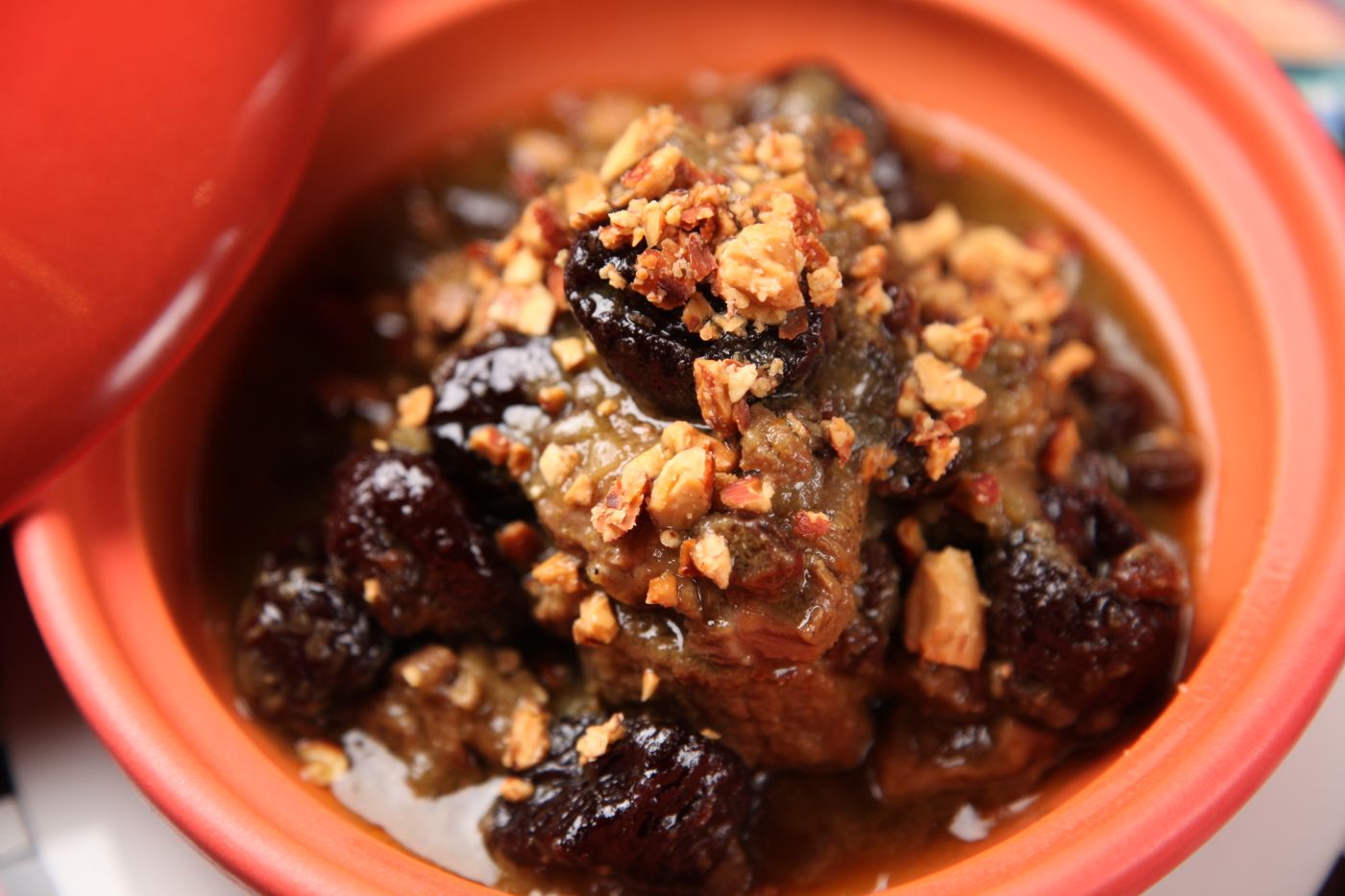
Beef brisket, barley, beans and potatoes left to cook on the lowest heat overnight, so by Saturday lunch everything has collapsed into one dark, sticky pot.
For 6 servings.
No reviews yet
Cooked this? Be the first to tell everyone how it went.
Sign in to rate and review this recipe.
Sign in to suggest corrections and improvements.
Community posts are opinions, not professional advice. Community guidelines
Videos belong to their creators and play on their platform’s terms — Cibora never re-hosts third-party video.
Buy these ingredients
Links open each store’s own site, where you see their live local prices. Our cost figures in the app are estimates only.
Brown the brisket chunks well on all sides in the oil in a heavy, ovenproof pot; remove and set aside.
Soften the sliced onion and garlic in the same pot, scraping up the browned bits from the bottom.
Layer in the potatoes, barley and drained beans, then nestle the browned brisket on top.
Sprinkle over the paprika, bay leaves and brown sugar, then pour in the stock so everything is just covered.
💡 Barley keeps drinking liquid as it cooks — start generous or you'll open a dry pot in the morning.
Bring to a boil on the stovetop, then cover tightly and transfer to the lowest possible oven setting, around 110°C.
Leave it undisturbed for at least 8 hours, ideally overnight, until the beans have broken down and the brisket pulls apart easily.
Stir gently to bring the collapsed beans and barley together with the meat, and serve straight from the pot.
Jewish law forbids lighting a fire on the Sabbath, so cholent was built to solve a real problem: a hot lunch cooked entirely before sundown Friday and left on a low flame or in a warm oven until the next day. Ashkenazi versions lean on barley, beans and brisket, while Sephardi kitchens make their own long-cooked equivalents under other names. The color deepens toward mahogany the longer it sits, and a good cholent is judged by how completely the beans have given way.
No suggestions yet. Spotted a wrong quantity, a missing step, or a better technique? Suggest it — accepted changes join the recipe’s version history.
Sign in to join the discussion. Reading is open to everyone.
Nothing here yet — questions about technique, timing, and substitutions all welcome.