🇪🇸 SpainCatalog recipe
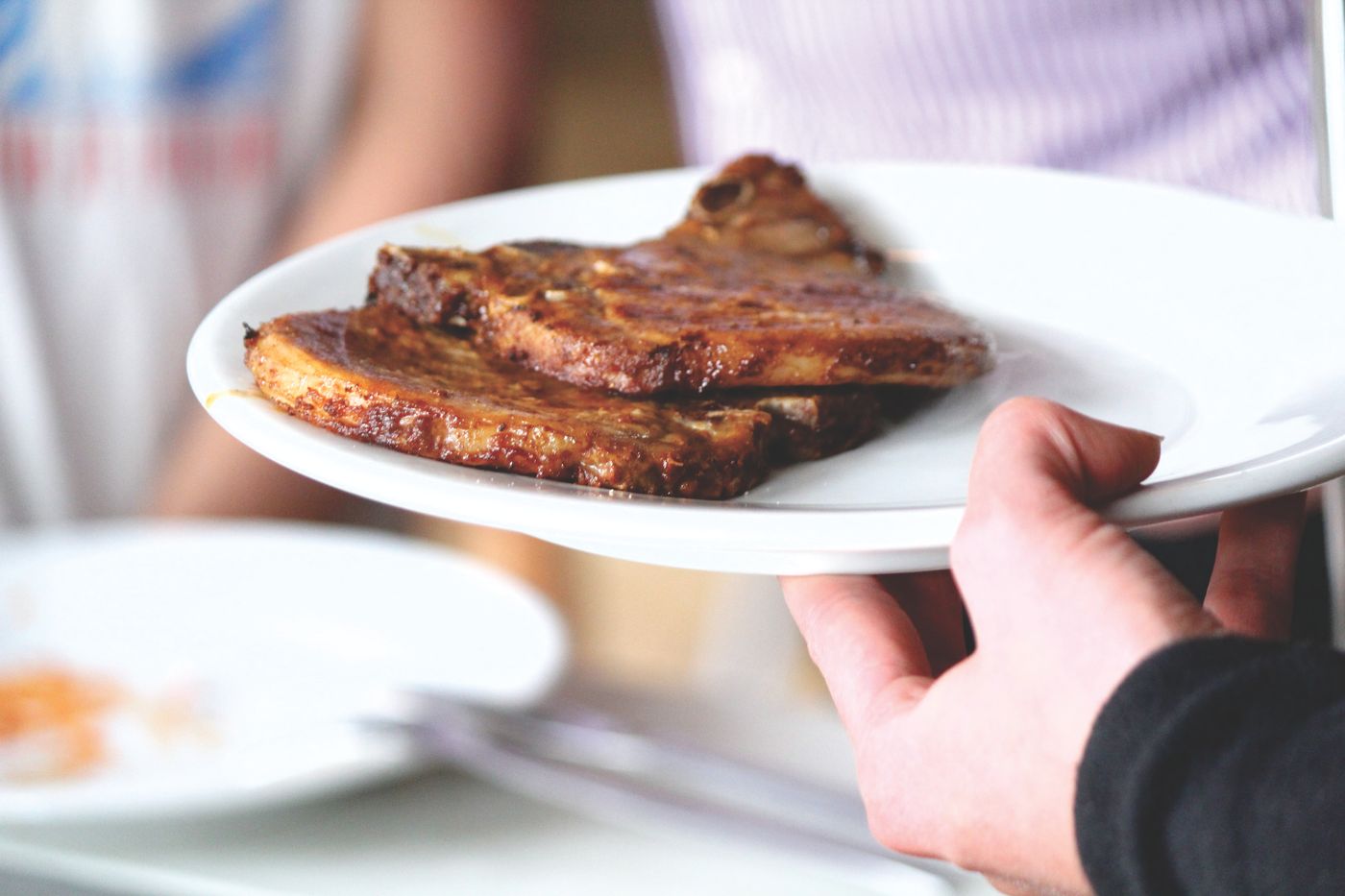
Pork chops rubbed with garlic, smoked paprika, oregano and vinegar, then seared hard in a ripping-hot skillet until the crust turns deep red-brown.
For 4 servings.
No reviews yet
Cooked this? Be the first to tell everyone how it went.
Sign in to rate and review this recipe.
Sign in to suggest corrections and improvements.
Community posts are opinions, not professional advice. Community guidelines
Videos belong to their creators and play on their platform’s terms — Cibora never re-hosts third-party video.
Buy these ingredients
Links open each store’s own site, where you see their live local prices. Our cost figures in the app are estimates only.
Mash the garlic with the paprika, oregano, vinegar, 1 tablespoon of the olive oil and the salt into a thick paste — a mortar works, or just smash the garlic with the flat of a knife and stir everything together in a bowl.
Rub the paste all over the pork chops, working it into the meat on both sides.
Marinate at room temperature at least 30 minutes, or refrigerate up to a day.
💡 Even a rushed 30-minute marinate turns the crust deep red-brown by the time it hits the pan; overnight is better if you can plan ahead.
If the chops were refrigerated, let them sit out 10 minutes before cooking so they cook evenly.
Heat the remaining olive oil in a skillet over high heat until just short of smoking.
Sear the chops undisturbed until a deep crust forms, about 4 minutes per side.
Check for doneness with an instant thermometer (63°C/145°F) or by cutting into the thickest chop — the juices should run clear with barely a blush of pink.
Rest the chops on a plate 5 minutes before serving.
Adobo — Spain's own garlic, paprika and vinegar marinade, unrelated to the Filipino dish that shares its name — has flavored and preserved pork since before refrigeration was common. Butcher counters across Spain still rub chops in it before they ever reach a home kitchen, which is why the flavor tastes instantly familiar even to cooks who have never made it themselves.
No suggestions yet. Spotted a wrong quantity, a missing step, or a better technique? Suggest it — accepted changes join the recipe’s version history.
Sign in to join the discussion. Reading is open to everyone.
Nothing here yet — questions about technique, timing, and substitutions all welcome.