π¨π³ ChinaCatalog recipe
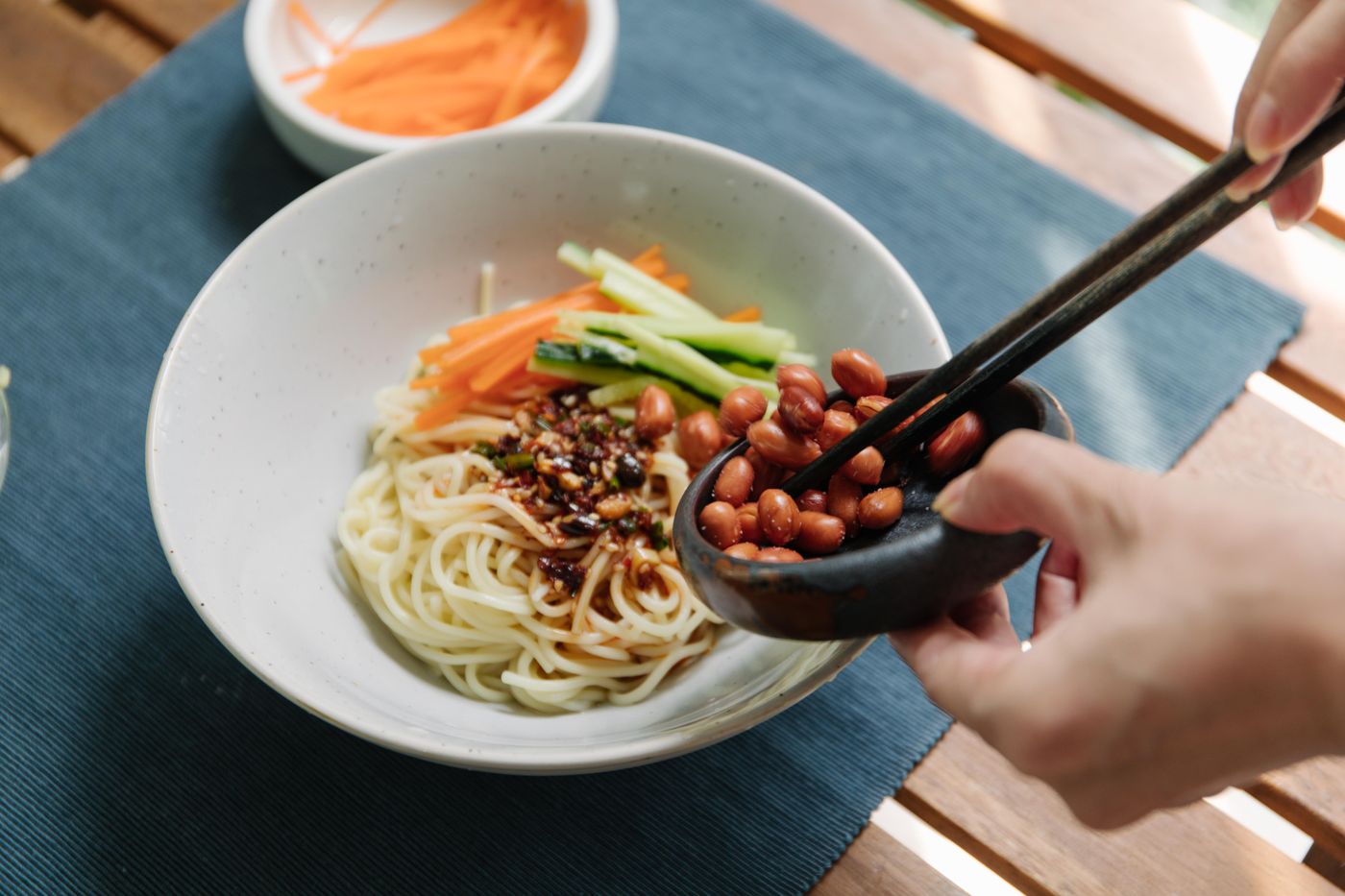
Chilled noodles slicked in a nutty sesame-peanut sauce sharpened with garlic and vinegar, piled with cucumber and spring onion for a dinner that needs no stove at the table.
For 4 servings.
No reviews yet
Cooked this? Be the first to tell everyone how it went.
Sign in to rate and review this recipe.
Sign in to suggest corrections and improvements.
Community posts are opinions, not professional advice. Community guidelines
Videos belong to their creators and play on their platformβs terms β Cibora never re-hosts third-party video.
Buy these ingredients
Links open each storeβs own site, where you see their live local prices. Our cost figures in the app are estimates only.
Boil the spaghetti in well-salted water until just tender, then drain and rinse thoroughly under cold water until fully cooled.
π‘ Rinsing stops the cooking and washes off the surface starch that would otherwise make the noodles clump.
Whisk the peanut butter with 3 tablespoons of hot water until smooth and pourable, then whisk in the soy sauce, rice vinegar, sesame oil, garlic and sugar.
Toss the cooled noodles with most of the sauce until every strand is coated.
Divide the noodles between bowls and top with cucumber, carrot and spring onion.
Drizzle with the remaining sauce and a thread of chili oil if using, then scatter with toasted sesame seed.
Serve cold or at room temperature; loosen with a splash of water if the sauce has thickened while sitting.
Liang mian, 'cold noodles,' cool a kitchen down on hot days across northern China, where cooks toss just-boiled noodles in cold water the moment they're done so nothing turns soft or sticky in the heat. Sesame paste is the traditional base; American kitchens leaned on peanut butter instead once it became the easier pantry staple, and the swap stuck because the two taste remarkably close. It travels well and needs no reheating, making it as much a packed lunch as a dinner.
No suggestions yet. Spotted a wrong quantity, a missing step, or a better technique? Suggest it β accepted changes join the recipeβs version history.
Sign in to join the discussion. Reading is open to everyone.
Nothing here yet β questions about technique, timing, and substitutions all welcome.