🇯🇵 JapanCatalog recipe
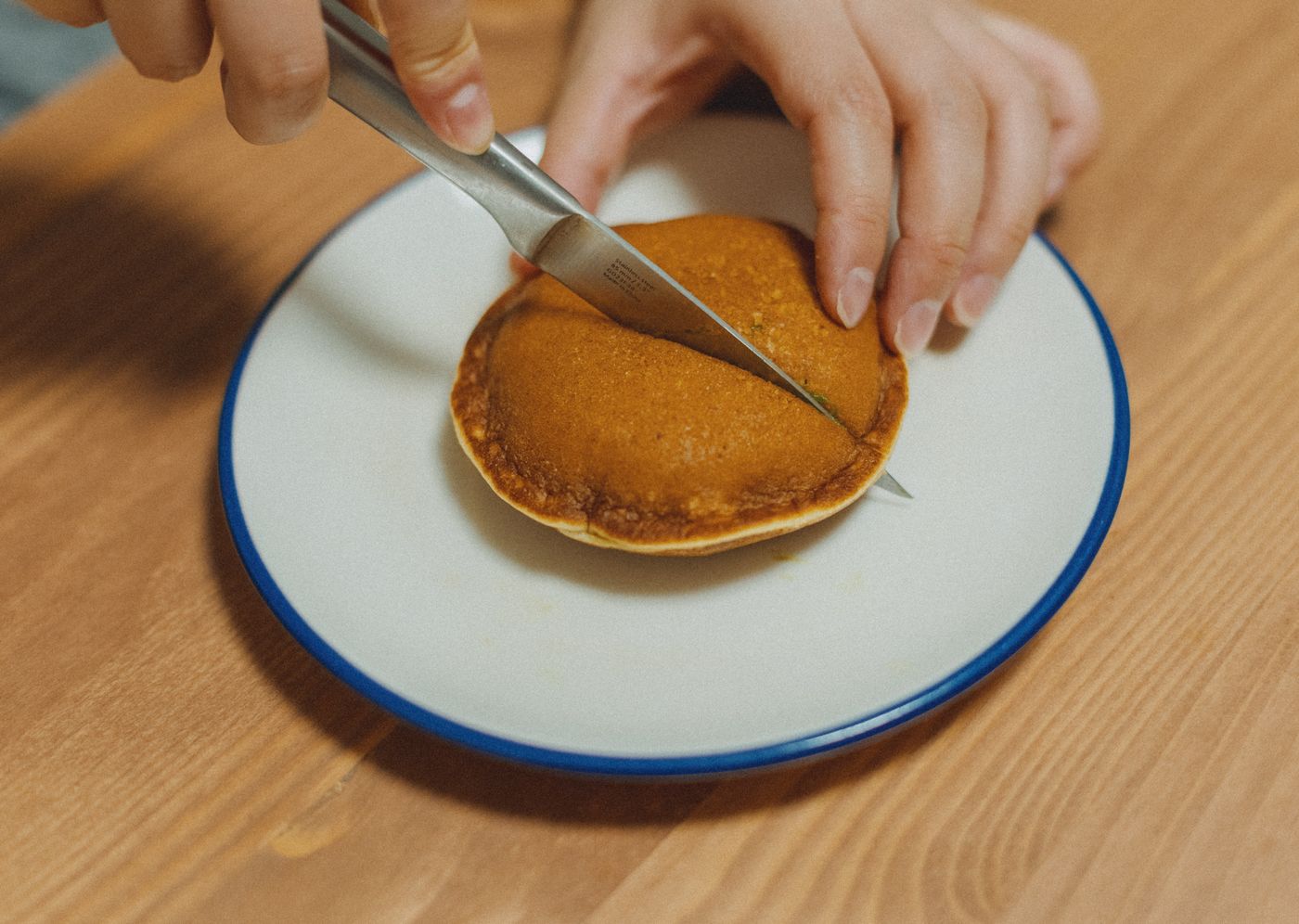
Two honey-sweetened pancakes griddled to an even caramel brown, pressed gently around a generous heart of sweet red bean paste.
How hard is it
Nothing to juggle — one thing at a time.
For 6 servings.
No reviews yet
Cooked this? Be the first to tell everyone how it went.
Sign in to rate and review this recipe.
Sign in to suggest corrections and improvements.
Community posts are opinions, not professional advice. Community guidelines
Videos belong to their creators and play on their platform’s terms — Cibora never re-hosts third-party video.
Buy these ingredients
Links open each store’s own site, where you see their live local prices. Our cost figures in the app are estimates only.
Whisk the eggs, sugar and honey until pale and slightly thickened, about 2 minutes.
Sift in the flour and baking powder, add the water, and fold into a smooth, thick-but-pourable batter.
Rest the batter for 15 minutes — it hydrates and the pancakes brown more evenly.
Heat a nonstick pan over medium-low and wipe it with oiled paper; the surface should look almost dry.
💡 An oil-slicked pan browns in blotches; a wiped pan gives dorayaki their even caramel face.
Ladle small rounds of batter and cook until bubbles pierce the surface, about 2 minutes, then flip for 1 minute more. Repeat for 12 pancakes.
Sandwich a generous spoonful of red bean paste between pairs of pancakes, pressing the edges gently to seal.
💡 Fill while the pancakes are barely warm so the paste softens and glues them together.
Dorayaki takes its name from the dora, a temple gong its round pancakes resemble; legend has a samurai leaving his gong behind at a farmhouse, where it became a griddle. The modern two-pancake sandwich dates to Tokyo in the early 1900s, and the robot cat Doraemon made it every Japanese child's favorite snack.
No suggestions yet. Spotted a wrong quantity, a missing step, or a better technique? Suggest it — accepted changes join the recipe’s version history.
Sign in to join the discussion. Reading is open to everyone.
Nothing here yet — questions about technique, timing, and substitutions all welcome.