🇱🇰 Sri LankaCatalog recipe
A bowl-shaped rice-and-coconut pancake with lacy, crisp edges and a soft egg set into its thick center, eaten hot with fingers and sambol.
For 4 servings.
No reviews yet
Cooked this? Be the first to tell everyone how it went.
Sign in to rate and review this recipe.
Sign in to suggest corrections and improvements.
Community posts are opinions, not professional advice. Community guidelines
Videos belong to their creators and play on their platform’s terms — Cibora never re-hosts third-party video.
Buy these ingredients
Links open each store’s own site, where you see their live local prices. Our cost figures in the app are estimates only.
Whisk the rice flour, yeast, sugar and a pinch of salt into the coconut milk plus about 250ml warm water until you have a thin, pourable batter, like heavy cream.
Cover and let it ferment somewhere warm until bubbly and roughly doubled, about 2 hours (or overnight in the fridge for more tang).
Heat the hopper pan or a small nonstick wok over medium, grease lightly, ladle in batter, and swirl it up the sides to form a lacy-edged bowl with a thick pool in the center.
Crack an egg into the center pool, cover with a lid, and cook until the edges are crisp and golden and the white is just set, 3–4 minutes.
💡 Don't stir the egg — a barely-set yolk sitting in a crisp bowl is the whole point.
Loosen the edges with a thin spatula and slide the hopper out onto a plate; repeat with the remaining batter and eggs.
Serve immediately with pol sambol or a curry while the edges are still crackling.
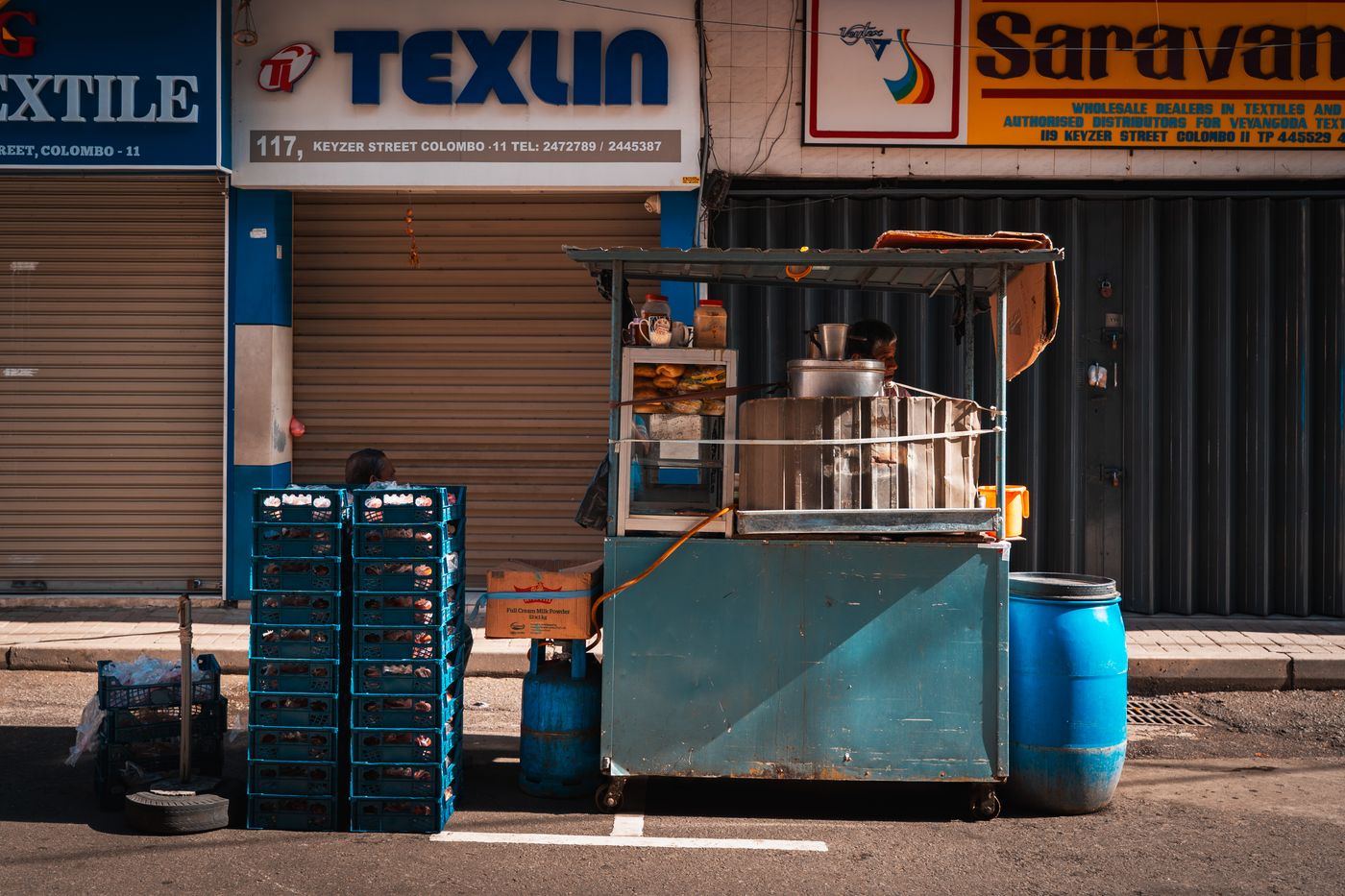
Hoppers reached Sri Lanka through South Indian trade and Dutch-Ceylonese kitchens, cooked in a small curved appachatti pan that gives the pancake its bowl shape. Roadside hopper stalls fry them to order at breakfast and again at dinner, cracking an egg into the center only once the batter has set at the edges.
No suggestions yet. Spotted a wrong quantity, a missing step, or a better technique? Suggest it — accepted changes join the recipe’s version history.
Sign in to join the discussion. Reading is open to everyone.
Nothing here yet — questions about technique, timing, and substitutions all welcome.