🇳🇬 NigeriaCatalog recipe
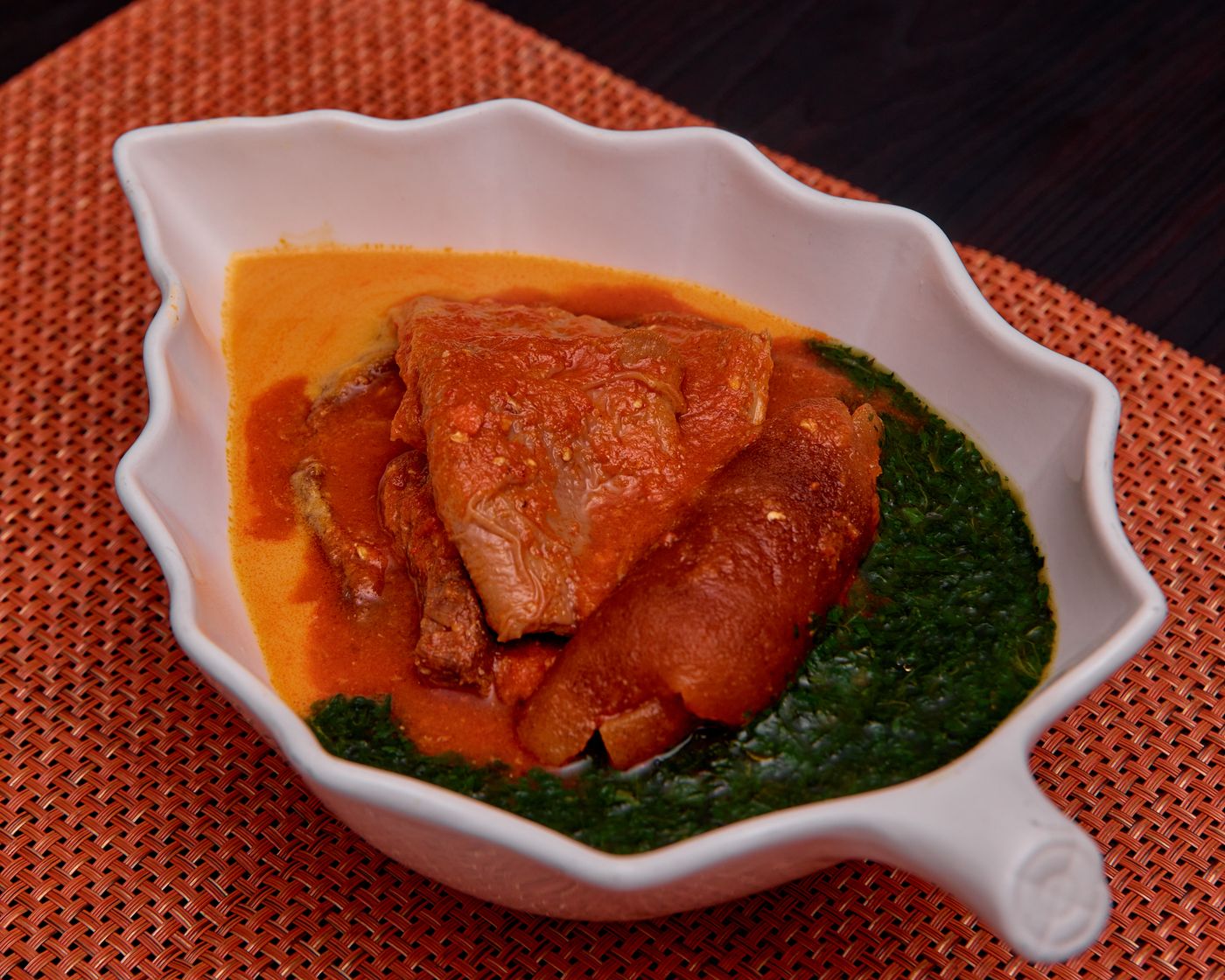
A rich, nubbly soup of ground melon seeds and leafy greens in palm oil, made for swallowing with pounded yam.
How hard is it
Nothing to juggle — one thing at a time.
Folding, not stirring — keeps the air in.
For 6 servings.
No reviews yet
Cooked this? Be the first to tell everyone how it went.
Sign in to rate and review this recipe.
Sign in to suggest corrections and improvements.
Community posts are opinions, not professional advice. Community guidelines
Videos belong to their creators and play on their platform’s terms — Cibora never re-hosts third-party video.
Buy these ingredients
Links open each store’s own site, where you see their live local prices. Our cost figures in the app are estimates only.
Season the beef with the diced onion, one bouillon cube and a pinch of salt, cover with water and simmer 25 minutes until tender. Keep the stock.
Mix the ground egusi with the blended onion and scotch bonnet and a splash of water into a thick paste.
Heat the palm oil in a large pot and fry spoonfuls of the egusi paste over medium heat, stirring occasionally, for 10 minutes until it clumps into golden curds.
💡 Let the paste sit between stirs — undisturbed frying is what forms the prized curds.
Add the beef with its stock, the smoked fish, crayfish and remaining bouillon, and simmer 10 minutes, loosening with water to a thick, spoonable consistency.
Fold in the spinach and cook just 3 minutes so it keeps its color.
💡 Greens go in last, always — long cooking turns them army-drab and dull.
Check the seasoning and serve hot with pounded yam, eba or rice.
Egusi — ground seeds of a bitter melon — thickens one of Nigeria's most beloved soups, claimed and cooked differently by Yoruba, Igbo and Efik kitchens alike. It headlines the class of 'soups' that are really hearty stews, eaten by hand with morsels of pounded yam, eba or fufu.
No suggestions yet. Spotted a wrong quantity, a missing step, or a better technique? Suggest it — accepted changes join the recipe’s version history.
Sign in to join the discussion. Reading is open to everyone.
Nothing here yet — questions about technique, timing, and substitutions all welcome.