🇨🇺 CubaCatalog recipe
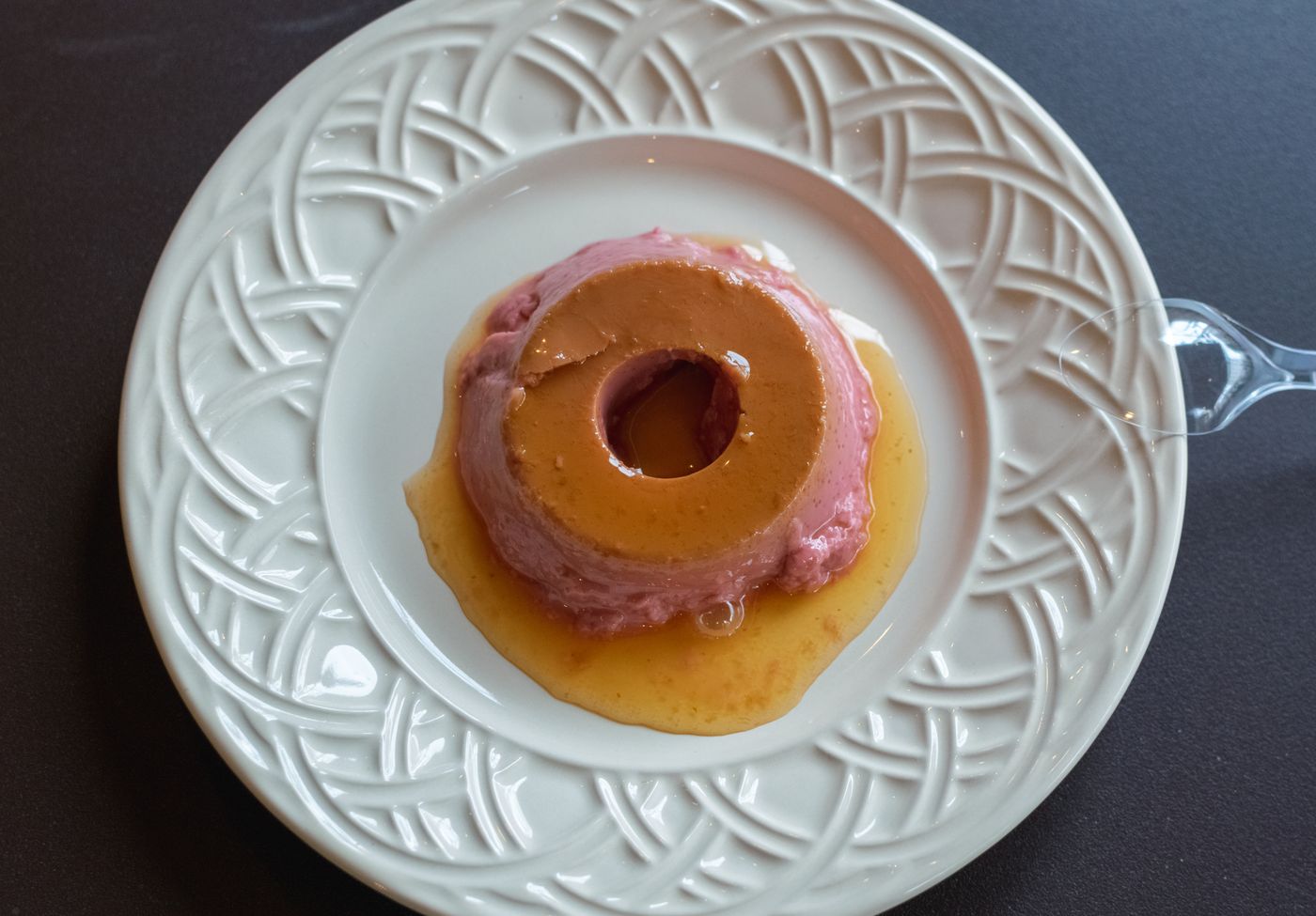
Dense caramel custard made rich with condensed and evaporated milk — the island's upside-down crown jewel.
How hard is it
Nothing to juggle — one thing at a time. Only 5 things to buy.
For 8 servings.
No reviews yet
Cooked this? Be the first to tell everyone how it went.
Sign in to rate and review this recipe.
Sign in to suggest corrections and improvements.
Community posts are opinions, not professional advice. Community guidelines
Videos belong to their creators and play on their platform’s terms — Cibora never re-hosts third-party video.
Buy these ingredients
Links open each store’s own site, where you see their live local prices. Our cost figures in the app are estimates only.
Melt the sugar in a dry saucepan over medium heat, swirling (not stirring) as it liquefies into an amber caramel, about 8 minutes.
💡 Stirring sugar as it melts invites crystals; swirl the pan instead and it melts clean.
Immediately pour the caramel into the flan mold, swirling to coat the bottom and slightly up the sides; set aside to crack-set.
Preheat the oven to 160°C and put a kettle of water on to boil for the water bath.
Blend the condensed milk, evaporated milk, eggs and vanilla until completely smooth.
Pour the custard over the set caramel and place the mold inside the larger pan.
Fill the outer pan with hot water halfway up the mold's sides, then bake until just set with a center shiver, 55–60 minutes.
💡 The water bath keeps the custard silk; baking it naked makes sweet scrambled eggs.
Lift the flan from the water bath, cool to room temperature, then chill in the fridge at least 4 hours, ideally overnight.
Run a knife around the edge, set a plate on top, and flip with courage — the caramel cascades down as the sauce.
Spain sent the flan; Cuba's canned-milk pantry made it denser, sweeter, permanent. The unmolding moment — caramel cascading — is a small domestic ceremony.
No suggestions yet. Spotted a wrong quantity, a missing step, or a better technique? Suggest it — accepted changes join the recipe’s version history.
Sign in to join the discussion. Reading is open to everyone.
Nothing here yet — questions about technique, timing, and substitutions all welcome.