🇫🇷 FranceCatalog recipe
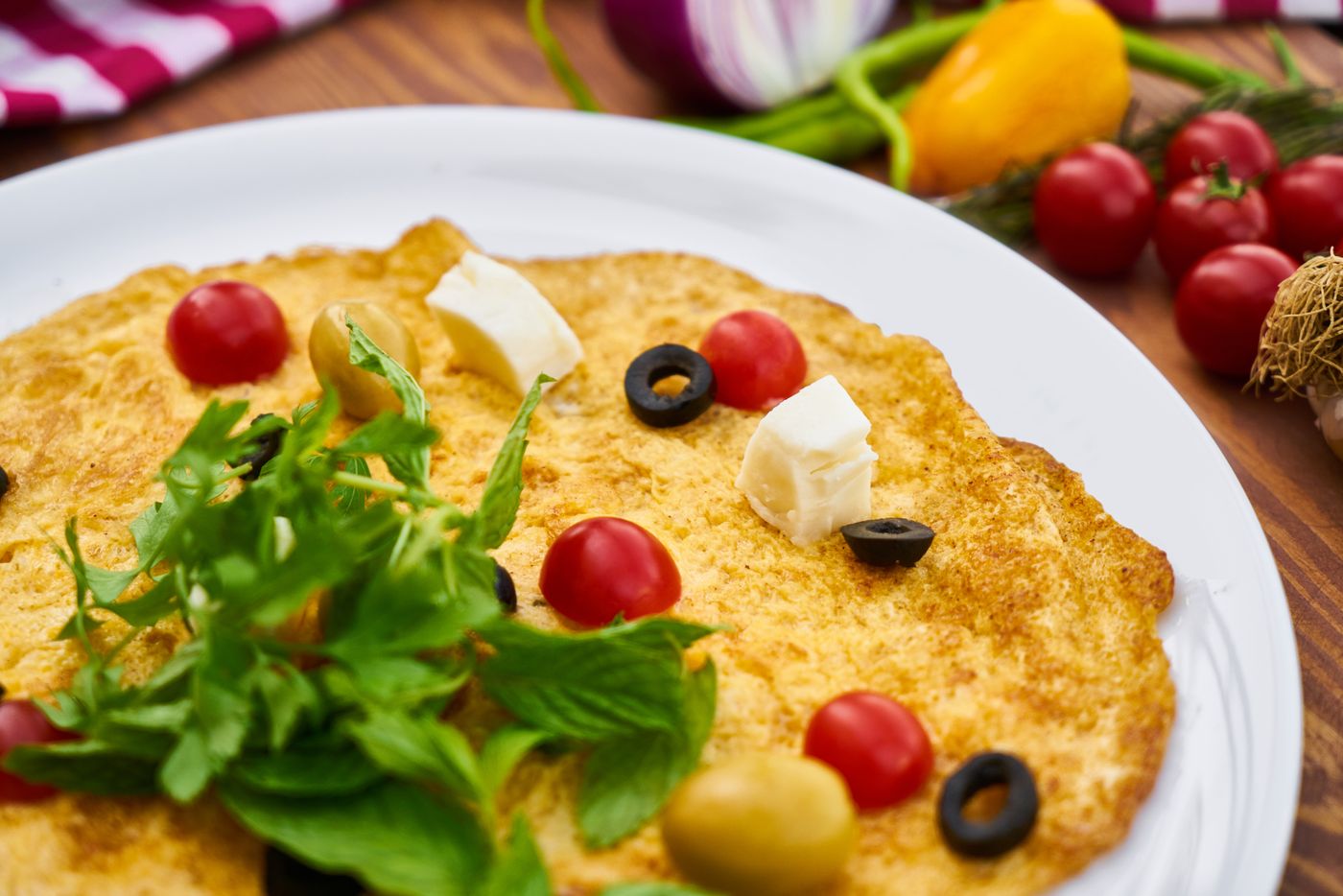
Eggs beaten just past streaky, rolled soft around melted gruyère and a scatter of chives — set in under two minutes, the fastest real dinner in the French kitchen.
For 2 servings.
No reviews yet
Cooked this? Be the first to tell everyone how it went.
Sign in to rate and review this recipe.
Sign in to suggest corrections and improvements.
Community posts are opinions, not professional advice. Community guidelines
Videos belong to their creators and play on their platform’s terms — Cibora never re-hosts third-party video.
Buy these ingredients
Links open each store’s own site, where you see their live local prices. Our cost figures in the app are estimates only.
Crack the eggs into a bowl with a pinch of salt and beat briskly with a fork for a full 30 seconds, until the whites and yolks are completely one color with no streaks.
Melt the butter in a nonstick skillet over medium-high heat, swirling to coat the sides, until it foams but hasn't browned.
💡 The butter should still be pale gold when the eggs go in — brown butter means the pan is too hot for a proper French omelette.
Pour in the eggs all at once. As the edges begin to set, drag the cooked egg toward the center with a fork, tilting the pan so raw egg runs into the gaps.
Once the eggs are mostly set but still glossy on top, scatter the gruyère and half the chives across the center.
Tilt the pan away from you and use the fork to roll the omelette over on itself into a tight oval, finishing seam-side down.
💡 Work fast here — a French omelette wants to be barely set when it's rolled, still creamy at the core.
Slide onto a plate, scatter with the remaining chives and parsley, and serve immediately while the center is still soft.
The French omelette is judged on technique alone: pale, barely set curds rolled into a seamless oval, never browned or crisped at the edges. It is the dish every culinary student is tested on before touching anything harder, and the one French home cooks reach for when the fridge is nearly bare.
No suggestions yet. Spotted a wrong quantity, a missing step, or a better technique? Suggest it — accepted changes join the recipe’s version history.
Sign in to join the discussion. Reading is open to everyone.
Nothing here yet — questions about technique, timing, and substitutions all welcome.