🇸🇪 SwedenCatalog recipe
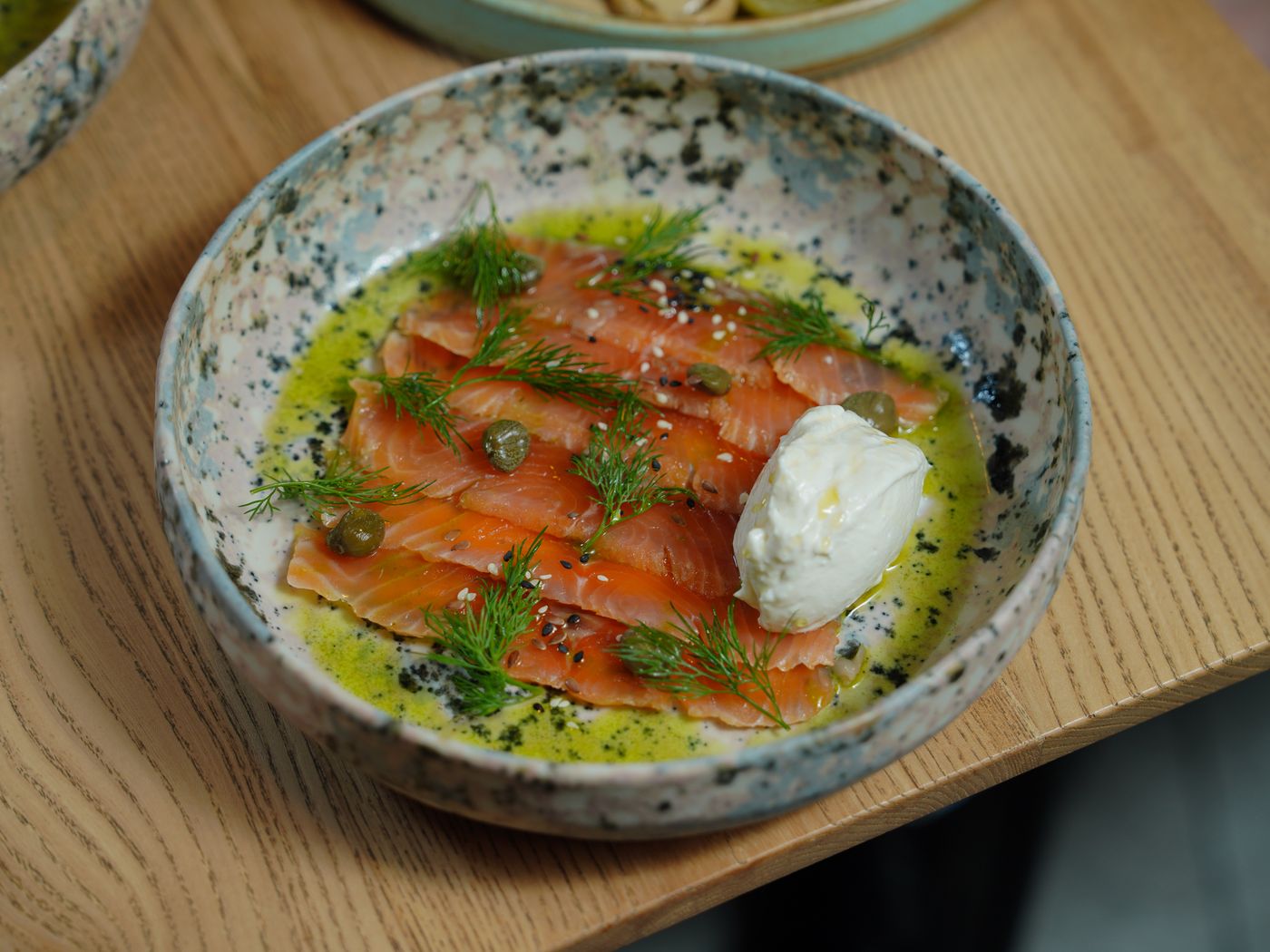
Raw salmon pressed under salt, sugar, crushed juniper and heaps of dill until it turns silky and rose-pink, sliced paper-thin onto rye bread with a sweet mustard sauce.
For 6 servings.
No reviews yet
Cooked this? Be the first to tell everyone how it went.
Sign in to rate and review this recipe.
Sign in to suggest corrections and improvements.
Community posts are opinions, not professional advice. Community guidelines
Videos belong to their creators and play on their platform’s terms — Cibora never re-hosts third-party video.
Buy these ingredients
Links open each store’s own site, where you see their live local prices. Our cost figures in the app are estimates only.
Pat the salmon pieces dry and lay one skin-side down in a dish lined with plastic wrap.
Mix the salt, most of the sugar, crushed juniper and cracked pepper; pack it over both flesh sides, then blanket with the chopped dill.
💡 Go heavier on the cure at the thick end of the fillet — it needs more time to penetrate.
Sandwich the two fillets flesh-to-flesh, wrap tightly in plastic, set in a dish and weigh down with cans.
Refrigerate 48 hours, turning the parcel and spooning off the accumulated brine every 12 hours.
💡 The salmon is ready when it feels firm to the touch, not raw and yielding.
Whisk the mustard, remaining sugar and vinegar, then drizzle in the oil until it turns thick and glossy; stir in chopped dill.
Scrape off the cure, slice the salmon on a sharp angle into thin sheets, and serve on rye bread with the mustard-dill sauce.
Gravlax means 'buried salmon' — medieval fishermen fermented salted fish in pits along the shore before refrigeration existed. The modern version skips the burial for a simple weighted cure in the refrigerator, though the name and the technique of packing fish under salt and sugar survive unchanged. It remains a fixture of the Christmas smörgåsbord and the Midsummer table, usually alongside boiled new potatoes.
No suggestions yet. Spotted a wrong quantity, a missing step, or a better technique? Suggest it — accepted changes join the recipe’s version history.
Sign in to join the discussion. Reading is open to everyone.
Nothing here yet — questions about technique, timing, and substitutions all welcome.