🇭🇺 HungaryCatalog recipe · Great Plain
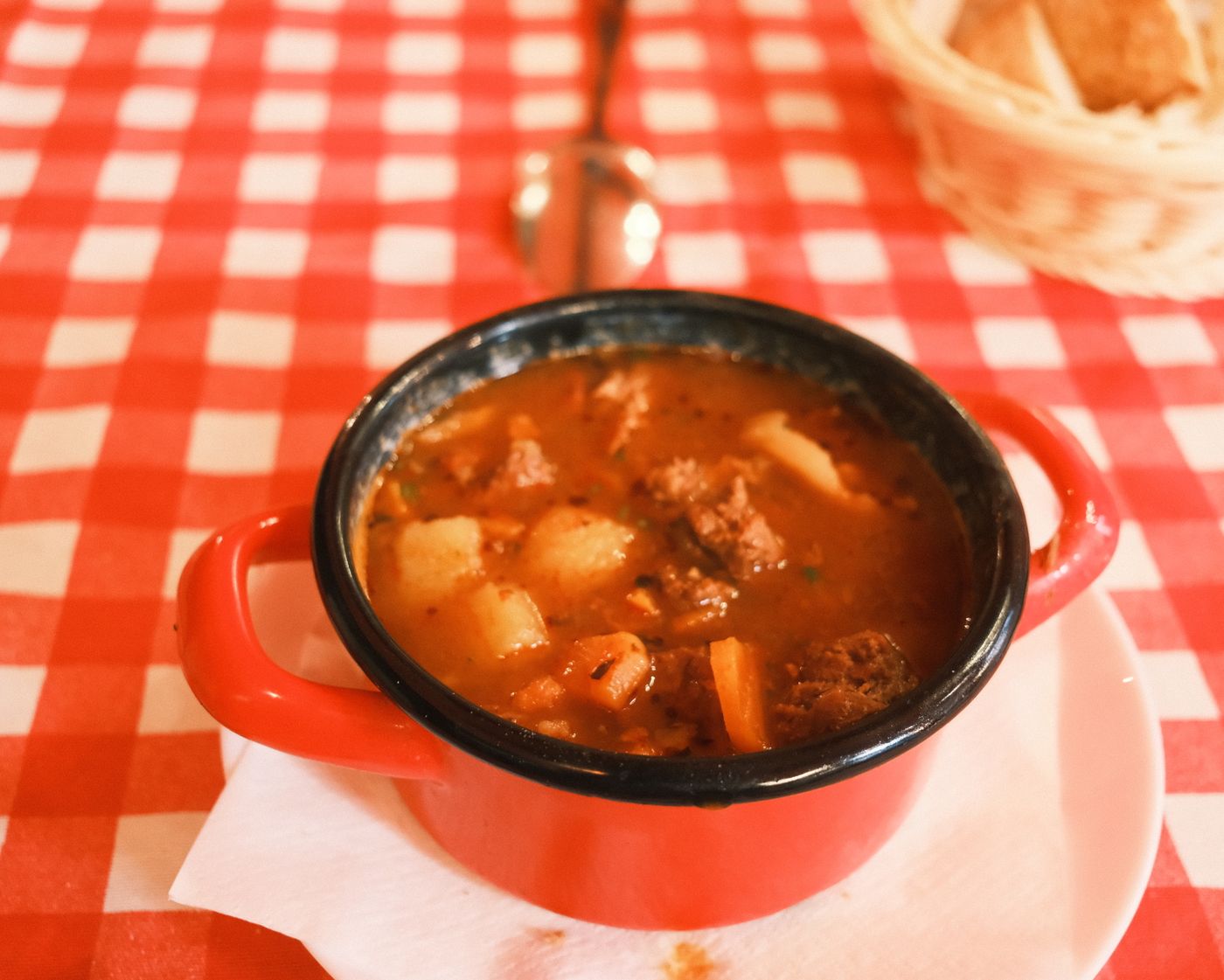
Beef chuck and potatoes simmered low in a paprika-red broth until the meat turns fall-apart tender, finished with a scatter of fresh parsley.
For 6 servings.
No reviews yet
Cooked this? Be the first to tell everyone how it went.
Sign in to rate and review this recipe.
Sign in to suggest corrections and improvements.
Community posts are opinions, not professional advice. Community guidelines
Videos belong to their creators and play on their platform’s terms — Cibora never re-hosts third-party video.
Buy these ingredients
Links open each store’s own site, where you see their live local prices. Our cost figures in the app are estimates only.
Render the lard in a large heavy pot, then brown the beef cubes in batches over high heat until deeply colored; set aside.
💡 Crowding the pot steams the meat instead of browning it — work in batches.
Soften the onion and garlic in the same fat over medium heat until translucent, about 8 minutes.
Pull the pot off the heat, stir in the paprika and caraway for a few seconds only, then return the beef and add just enough stock to cover.
💡 Paprika turns bitter within seconds over direct heat — pull the pot away first.
Add the bay leaves, cover, and simmer gently until the beef is fork-tender, about 1 hour 15 minutes.
Add the tomato, bell pepper and carrot with the remaining stock; simmer uncovered 20 minutes.
Add the potato and simmer until tender, about 15 more minutes.
Season with salt, discard the bay leaves, and finish each bowl with parsley.
Gulyás began as cattle-drover's trail food on the Great Hungarian Plain, cooked over open fire in a bogrács kettle between long days of herding. Sweet paprika, adopted through Balkan and Ottoman trade routes, turned a plain meat-and-onion pot into Hungary's national dish by the 19th century. It stays a soup, not the thick stew foreigners often expect, ladled generously with bread on the side.
No suggestions yet. Spotted a wrong quantity, a missing step, or a better technique? Suggest it — accepted changes join the recipe’s version history.
Sign in to join the discussion. Reading is open to everyone.
Nothing here yet — questions about technique, timing, and substitutions all welcome.