🇱🇧 LebanonCatalog recipe · Tripoli
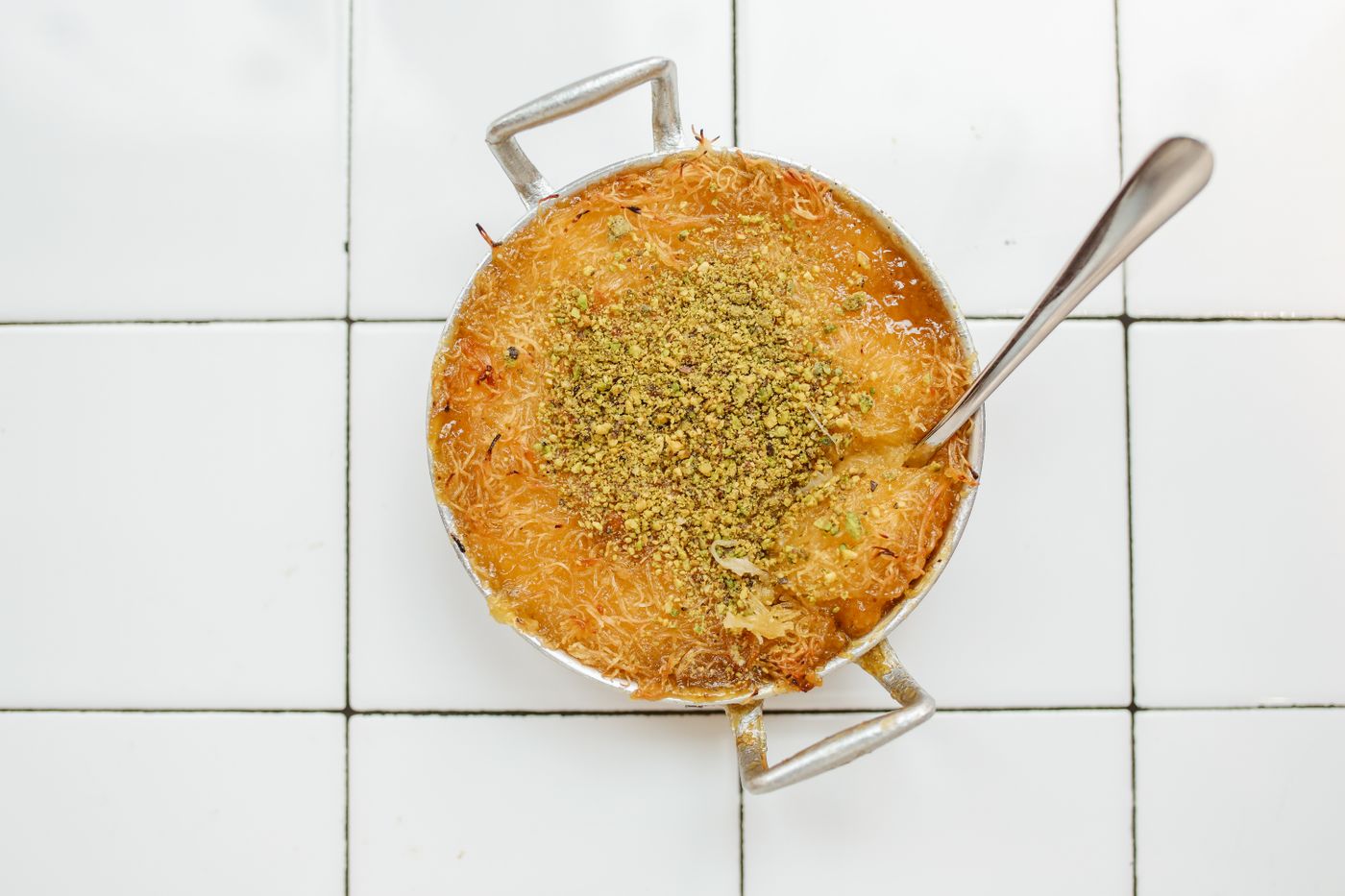
Molten white cheese under a crisp crown of buttered kataifi, doused hot with orange-blossom syrup and eaten while the cheese still pulls.
How hard is it
A straightforward cook.
One moment where you are juggling two things at once.
For 8 servings.
No reviews yet
Cooked this? Be the first to tell everyone how it went.
Sign in to rate and review this recipe.
Sign in to suggest corrections and improvements.
Community posts are opinions, not professional advice. Community guidelines
Videos belong to their creators and play on their platform’s terms — Cibora never re-hosts third-party video.
Buy these ingredients
Links open each store’s own site, where you see their live local prices. Our cost figures in the app are estimates only.
Simmer the sugar, water and lemon squeeze for 8 minutes, stir in the orange blossom water off the heat, and cool completely.
Pulse the kataifi in a processor into short strands, then work the melted butter through with your hands until every strand glistens.
💡 Under-buttered kataifi bakes pale and dry — be thorough here.
Press two-thirds of the pastry firmly over the base and sides of a round pan.
Cover with the grated cheese, leaving a finger of bare pastry at the rim, and top with the remaining kataifi, pressing down well.
💡 Cheese touching the pan edge leaks and burns; the pastry border seals it in.
Bake at 190°C for 30–35 minutes until deep gold and bubbling at the edges.
Pour the cold syrup evenly over the hot knafeh — it will hiss — and let it settle for 5 minutes.
Invert or serve from the pan, scattered with ground pistachio, while the cheese still pulls.
Knafeh is the Levant's most theatrical sweet, and the northern city of Tripoli is Lebanon's undisputed capital of it, its old souk lined with copper trays. Lebanese knafeh is breakfast as much as dessert: a hot slab folded into a kaake bread ring and eaten on the walk to work.
No suggestions yet. Spotted a wrong quantity, a missing step, or a better technique? Suggest it — accepted changes join the recipe’s version history.
Sign in to join the discussion. Reading is open to everyone.
Nothing here yet — questions about technique, timing, and substitutions all welcome.