π°π· South KoreaCatalog recipe
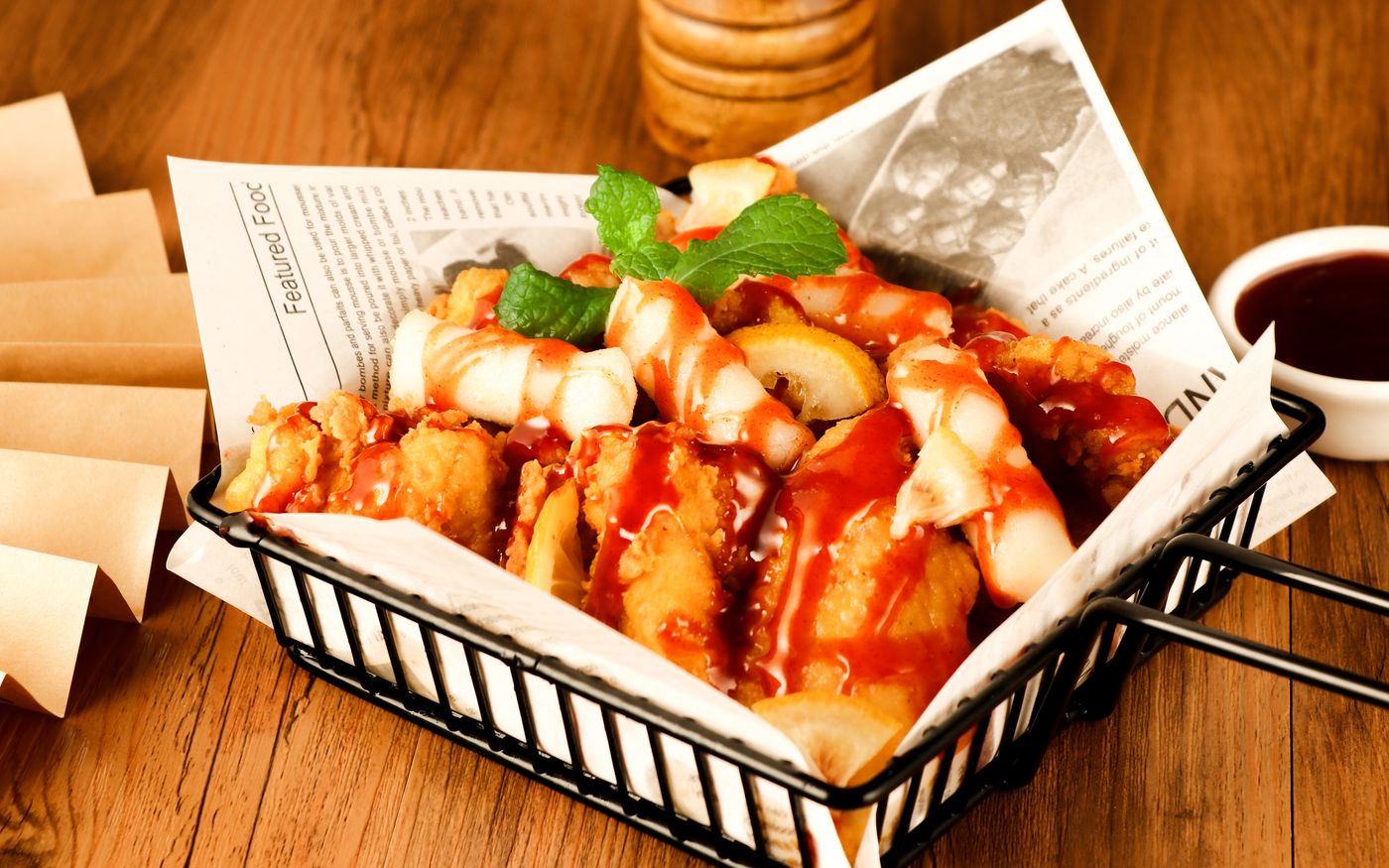
Double-fried chicken with an audibly crisp shell, tossed in a sticky sweet-heat glaze of gochujang, garlic and honey.
For 4 servings.
No reviews yet
Cooked this? Be the first to tell everyone how it went.
Sign in to rate and review this recipe.
Sign in to suggest corrections and improvements.
Community posts are opinions, not professional advice. Community guidelines
Buy these ingredients
Links open each storeβs own site, where you see their live local prices. Our cost figures in the app are estimates only.
Videos belong to their creators and play on their platformβs terms β Cibora never re-hosts third-party video.
Pat the wings very dry, season with salt, and toss in the mixed potato starch, flour and baking powder until every crevice is coated.
π‘ Dry chicken and a thin starch coat are the secret β thick wet batter turns leathery.
Heat the oil to 165Β°C and fry the wings in batches for 8 minutes; they should be cooked through but pale. Rest them on a rack.
While they rest, simmer the gochujang, honey, soy sauce, vinegar, garlic and ginger with a splash of water for 3 minutes into a glossy glaze.
Raise the oil to 190Β°C and fry the wings a second time, 4 minutes, until deeply golden and rigid when tapped.
π‘ The second fry at higher heat is what buys you a crust that survives the sauce.
Toss the hot wings through the warm glaze in a big bowl until lacquered.
Pile onto a platter, scatter with sesame seeds, and serve immediately β ideally with something cold to drink.
Fried chicken arrived in Korea with American soldiers, but Koreans made it their own with the double fry β a technique that renders the fat out of the skin and leaves a crust that stays crackly even under sauce. Paired with beer it becomes chimaek, a national pastime with its own festivals.
No suggestions yet. Spotted a wrong quantity, a missing step, or a better technique? Suggest it β accepted changes join the recipeβs version history.
Sign in to join the discussion. Reading is open to everyone.
Nothing here yet β questions about technique, timing, and substitutions all welcome.