🇵🇪 PeruCatalog recipe
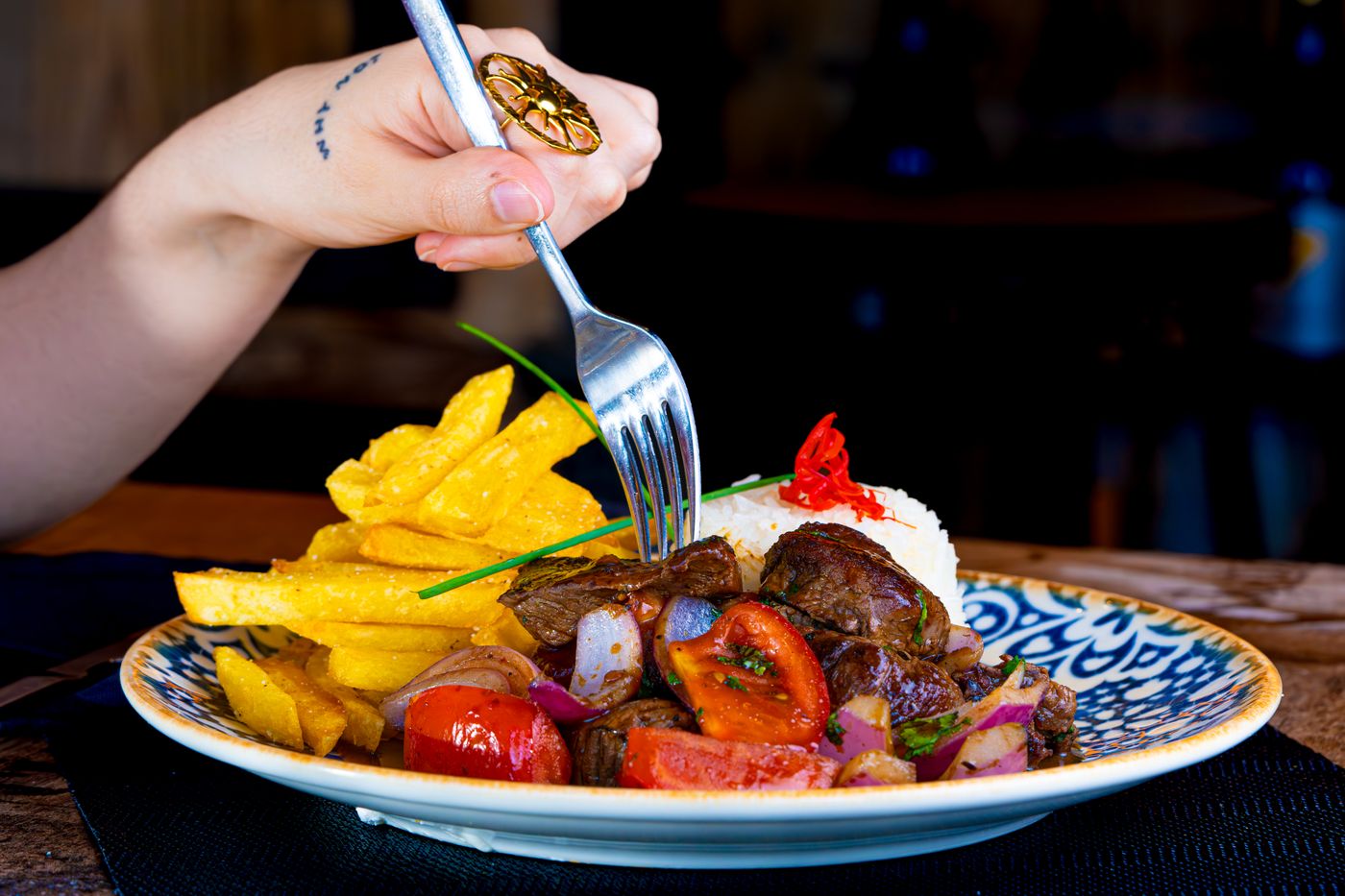
Flame-kissed strips of beef stir-fried with red onion, tomato and soy, tumbled over crisp fries — Peru's beloved Chinese-Creole mashup.
How hard is it
A straightforward cook.
One moment where you are juggling two things at once. Folding, not stirring — keeps the air in. Searing needs a properly hot pan.
For 4 servings.
No reviews yet
Cooked this? Be the first to tell everyone how it went.
Sign in to rate and review this recipe.
Sign in to suggest corrections and improvements.
Community posts are opinions, not professional advice. Community guidelines
Videos belong to their creators and play on their platform’s terms — Cibora never re-hosts third-party video.
Buy these ingredients
Links open each store’s own site, where you see their live local prices. Our cost figures in the app are estimates only.
Fry the potatoes in 180°C oil until golden and crisp, about 6 minutes. Drain, salt and keep warm.
Season the beef strips generously with salt and pepper and let them come to room temperature while the wok heats.
💡 Cold meat steams instead of searing — ten minutes on the counter makes a real difference.
Get the wok smoking hot with 1 tablespoon of oil and sear the beef in two batches, about 90 seconds per batch, until browned but still pink inside. Set aside.
Add another spoon of oil and stir-fry the onion, garlic and aji amarillo paste for 1 minute — the onion should stay crunchy.
💡 Everything from here moves fast; have the tomato, soy and vinegar within arm's reach.
Return the beef with the tomato, soy sauce and vinegar. Toss over full heat for 1 minute so the juices form a glossy pan sauce.
Fold in the fries (or pile them alongside), shower with cilantro, and serve at once with rice.
Lomo saltado was born in the chifa kitchens of Lima's 19th-century Cantonese immigrants, who brought the wok and soy sauce to Peruvian beef and aji amarillo. Serving the stir-fry over french fries and rice at the same time is not excess — it is the whole point.
No suggestions yet. Spotted a wrong quantity, a missing step, or a better technique? Suggest it — accepted changes join the recipe’s version history.
Sign in to join the discussion. Reading is open to everyone.
Nothing here yet — questions about technique, timing, and substitutions all welcome.