🇲🇾 MalaysiaCatalog recipe
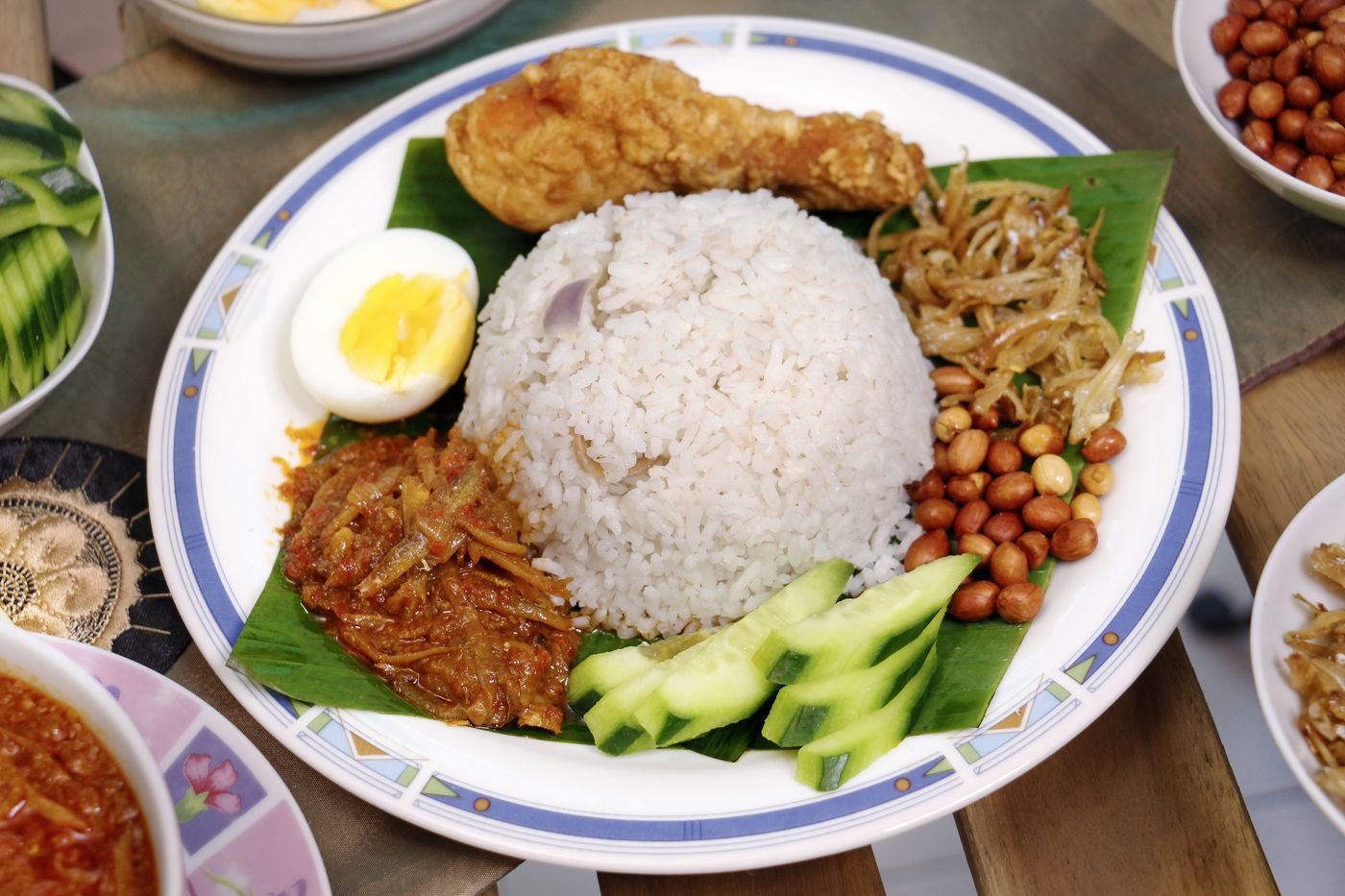
Coconut rice with fiery sambal, crisp anchovies, peanuts, egg and cucumber — Malaysia's national breakfast, wrapped in banana leaf.
How hard is it
A straightforward cook.
One moment where you are juggling two things at once.
For 4 servings.
No reviews yet
Cooked this? Be the first to tell everyone how it went.
Sign in to rate and review this recipe.
Sign in to suggest corrections and improvements.
Community posts are opinions, not professional advice. Community guidelines
Videos belong to their creators and play on their platform’s terms — Cibora never re-hosts third-party video.
Buy these ingredients
Links open each store’s own site, where you see their live local prices. Our cost figures in the app are estimates only.
Rinse the rice, then cook it in the coconut milk plus water with a pinch of salt (add ginger or a knotted pandan if you have it), covered, until the grains are tender and the liquid is absorbed.
Meanwhile, hard-boil the eggs: cover with cold water, bring to a boil, then simmer 9 minutes.
💡 Drop them straight into cold water after simmering — it stops the yolk going grey and makes them easier to peel.
Blend the soaked chilies and shallots into a smooth paste for the sambal.
Fry the paste until it darkens and the raw smell is gone, then season with tamarind, sugar and salt into a sweet-hot sambal.
💡 Nasi lemak sambal leans sweeter than you expect — that's authentic, not a mistake.
In the same pan, fry the anchovies until crisp and toast the peanuts until golden.
Peel the eggs and halve them; slice the cucumber.
Plate rice with sambal, anchovies, peanuts, egg and cucumber. Banana leaf optional, correct.
Nasi lemak began as a farmer's breakfast bundle and became the dish on the national menu, the airline, and every 7am street corner. The sambal decides a stall's reputation — sweetness and heat in careful tension.
No suggestions yet. Spotted a wrong quantity, a missing step, or a better technique? Suggest it — accepted changes join the recipe’s version history.
Sign in to join the discussion. Reading is open to everyone.
Nothing here yet — questions about technique, timing, and substitutions all welcome.