🇵🇰 PakistanCatalog recipe · Lahore
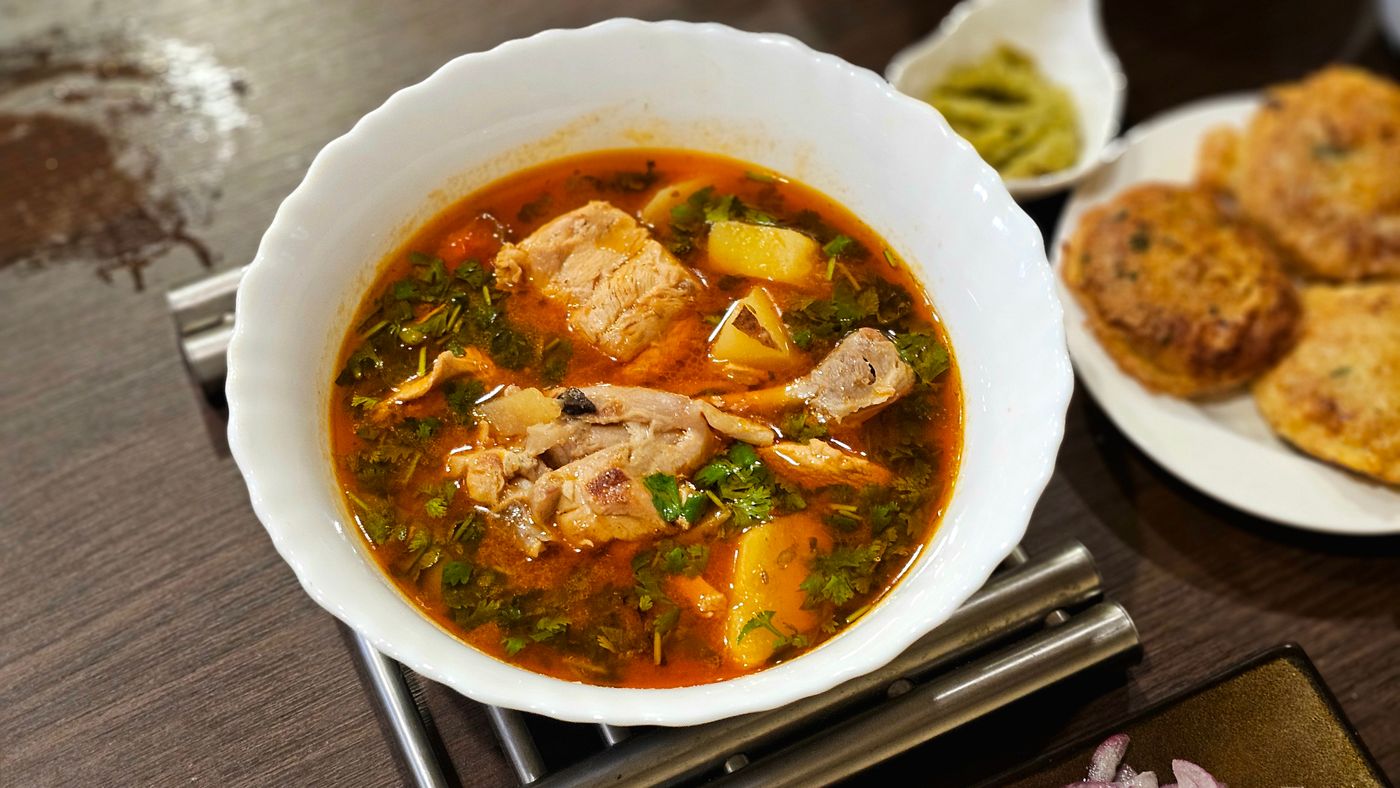
Beef shank stewed overnight in a peppery, slow-thickened gravy, crowned with ginger and lemon — the breakfast of Mughal emperors and Lahori mornings.
How hard is it
Nothing to juggle — one thing at a time.
Searing needs a properly hot pan. Fine knife work.
For 6 servings.
No reviews yet
Cooked this? Be the first to tell everyone how it went.
Sign in to rate and review this recipe.
Sign in to suggest corrections and improvements.
Community posts are opinions, not professional advice. Community guidelines
Videos belong to their creators and play on their platform’s terms — Cibora never re-hosts third-party video.
Buy these ingredients
Links open each store’s own site, where you see their live local prices. Our cost figures in the app are estimates only.
Slice the onions thinly and pat the beef shank dry.
Heat oil in the pot and fry the onions until deep golden brown.
Add the beef shank and all the ground spices — ginger, fennel, garam masala, chili powder — and sear over high heat until the meat is browned on all sides and the spices smell toasted.
Cover the beef deep with water, bring to a boil, then drop to the lowest flame and simmer, lid on, 4–5 hours (or transfer to a low oven overnight).
💡 Nihari refuses to be hurried. The marrow melting into the gravy IS the recipe.
Once the meat is fork-tender, skim off any fat pooling on the surface — nihari should end up glossy, not greasy.
Whisk the toasted flour with a little water to a smooth slurry; stream it into the simmering pot and cook 20 minutes, stirring, until the gravy turns silky and clings to the spoon.
Ladle into bowls and top with ginger juliennes and chopped cilantro; serve with lemon and naan for the ritual dip-and-tear.
Nihari — from 'nihar', morning — was eaten at dawn by laborers and nawabs alike. Old Lahore shops seed each day's pot with yesterday's 'taar', a sourdough of gravy generations deep.
No suggestions yet. Spotted a wrong quantity, a missing step, or a better technique? Suggest it — accepted changes join the recipe’s version history.
Sign in to join the discussion. Reading is open to everyone.
Nothing here yet — questions about technique, timing, and substitutions all welcome.