π―π΅ JapanCatalog recipe
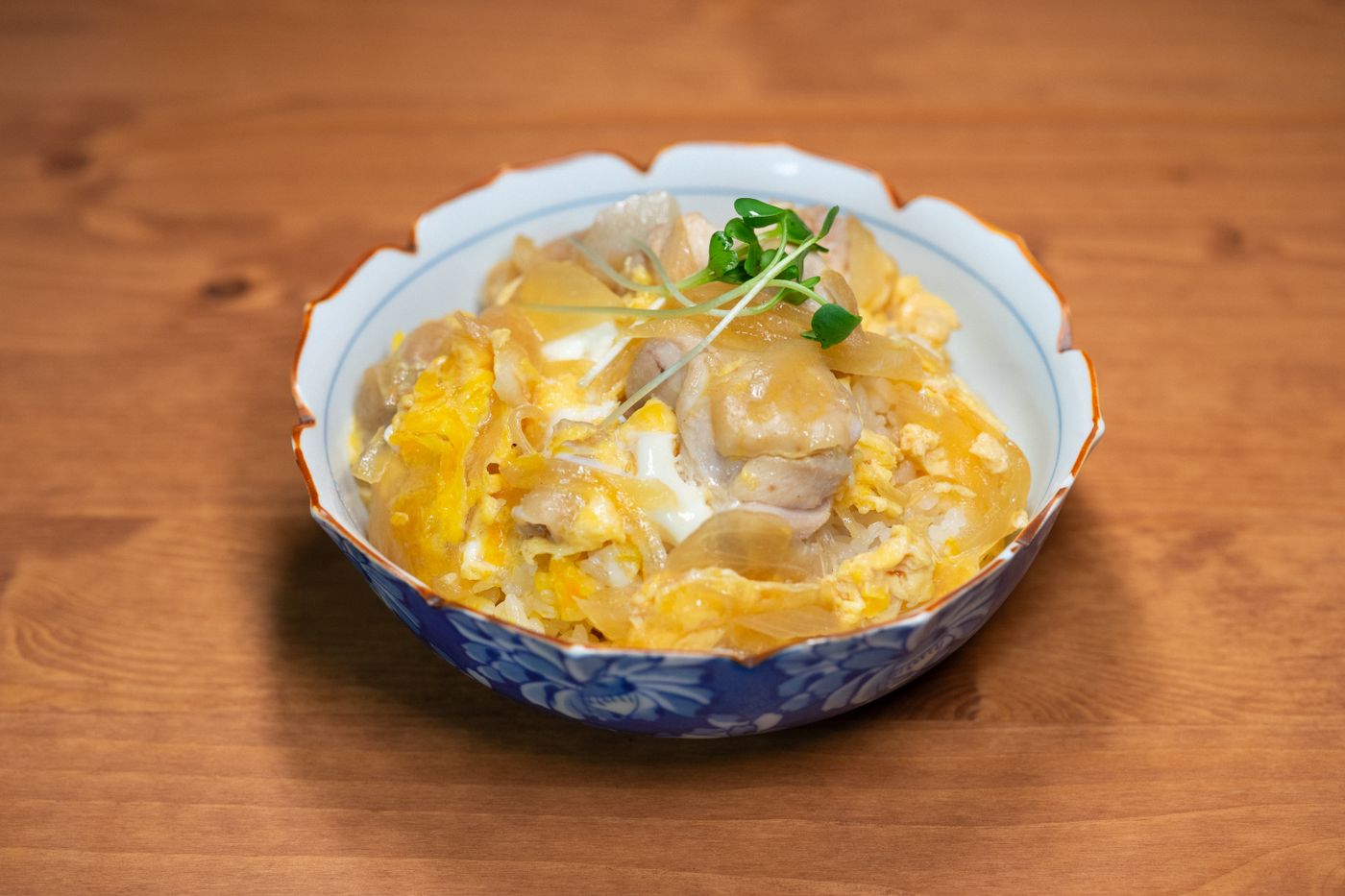
Chicken thigh and soft-simmered onion bound in barely-set egg, slid whole over a bowl of hot rice β the fastest, most comforting bowl in Japanese home cooking.
For 4 servings.
No reviews yet
Cooked this? Be the first to tell everyone how it went.
Sign in to rate and review this recipe.
Sign in to suggest corrections and improvements.
Community posts are opinions, not professional advice. Community guidelines
Videos belong to their creators and play on their platformβs terms β Cibora never re-hosts third-party video.
Buy these ingredients
Links open each storeβs own site, where you see their live local prices. Our cost figures in the app are estimates only.
Simmer the dashi, soy sauce, mirin and sugar with the sliced onion in a small skillet until the onion softens, about 4 minutes.
Add the chicken, cover, and simmer until just cooked through, about 6 minutes.
Beat the eggs loosely β a few streaks of white and yolk should still show.
π‘ Over-beating the eggs makes the finished bowl taste like an omelette instead of a soft-set custard.
Pour half the egg over the chicken in a spiral, cover, and let it just begin to set, about 30 seconds.
Pour in the rest of the egg, cover again, and cook until barely set but still glossy, about 45 seconds β it finishes off the heat.
π‘ Two additions of egg give the classic ribboned texture; one pour makes a flat omelette.
Slide the chicken and egg whole over bowls of hot rice, scatter with spring onion, and serve immediately.
Oyakodon means 'parent-and-child bowl,' for the chicken and egg cooked together, and it grew out of the donburi-ya (rice-bowl shops) that spread through Tokyo once eating chicken became common in the late 1800s. It is standard lunch-counter food today, ordered by name at soba shops that serve almost nothing else alongside it. The dish lives or dies on the egg staying loose rather than scrambled solid.
No suggestions yet. Spotted a wrong quantity, a missing step, or a better technique? Suggest it β accepted changes join the recipeβs version history.
Sign in to join the discussion. Reading is open to everyone.
Nothing here yet β questions about technique, timing, and substitutions all welcome.