🇮🇳 IndiaCatalog recipe
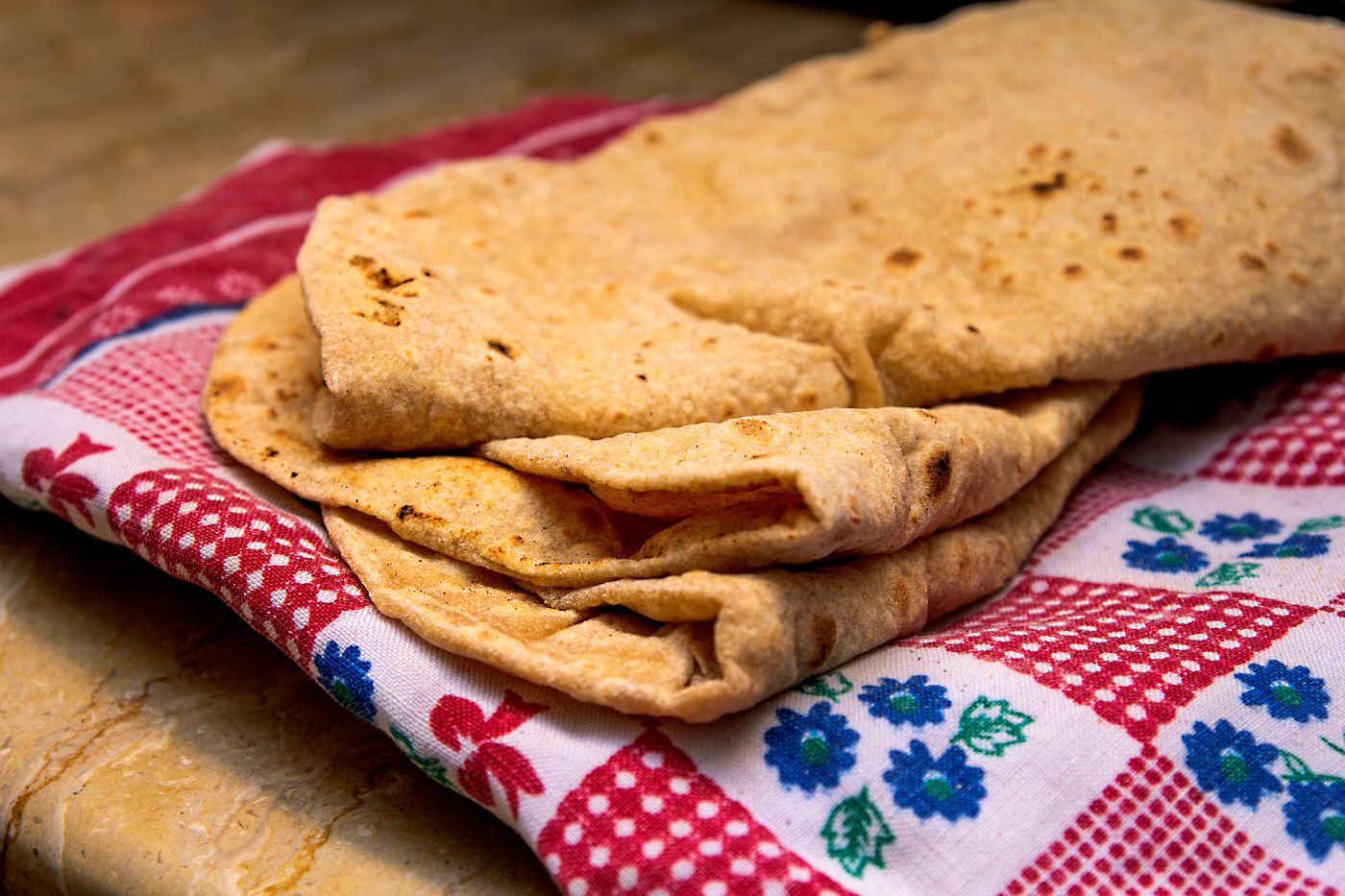
Thin whole wheat dough rolled fine and puffed into a full balloon over direct heat — the plain, fat-free roti eaten with dinner most nights of the week.
For 4 servings.
No reviews yet
Cooked this? Be the first to tell everyone how it went.
Sign in to rate and review this recipe.
Sign in to suggest corrections and improvements.
Community posts are opinions, not professional advice. Community guidelines
Videos belong to their creators and play on their platform’s terms — Cibora never re-hosts third-party video.
Buy these ingredients
Links open each store’s own site, where you see their live local prices. Our cost figures in the app are estimates only.
Mix the flour and salt, then work in the water gradually to form a soft, smooth dough. Knead 5 minutes until it springs back when poked.
Cover and rest the dough 20 minutes.
💡 The rest relaxes the gluten so the phulka rolls out even and puffs cleanly.
Divide into 8 balls. Roll each on a floured surface into a thin, even round about 15 cm across.
Cook on a hot dry griddle about 30 seconds per side, until small bubbles appear and light spots form.
Move the flatbread directly over an open flame, or back onto the very hot dry griddle, for a few seconds until it puffs into a full balloon, then flip once.
💡 It has to be genuinely hot before this step — a lukewarm pan will never make it puff.
Stack in a cloth-lined container to keep soft while you cook the rest; a little butter or ghee brushed on at the table is optional but traditional.
Phulka is the daily flatbread of North and Central Indian households, distinguished from richer parathas by having no fat worked into the dough or brushed on before cooking. The final puff over an open flame is considered proof of a properly rolled, evenly thin dough — a small kitchen skill passed down by watching, not measuring. It's served hot off the stove, one at a time, rather than made in a batch ahead of the meal.
No suggestions yet. Spotted a wrong quantity, a missing step, or a better technique? Suggest it — accepted changes join the recipe’s version history.
Sign in to join the discussion. Reading is open to everyone.
Nothing here yet — questions about technique, timing, and substitutions all welcome.