🇬🇧 United KingdomCatalog recipe
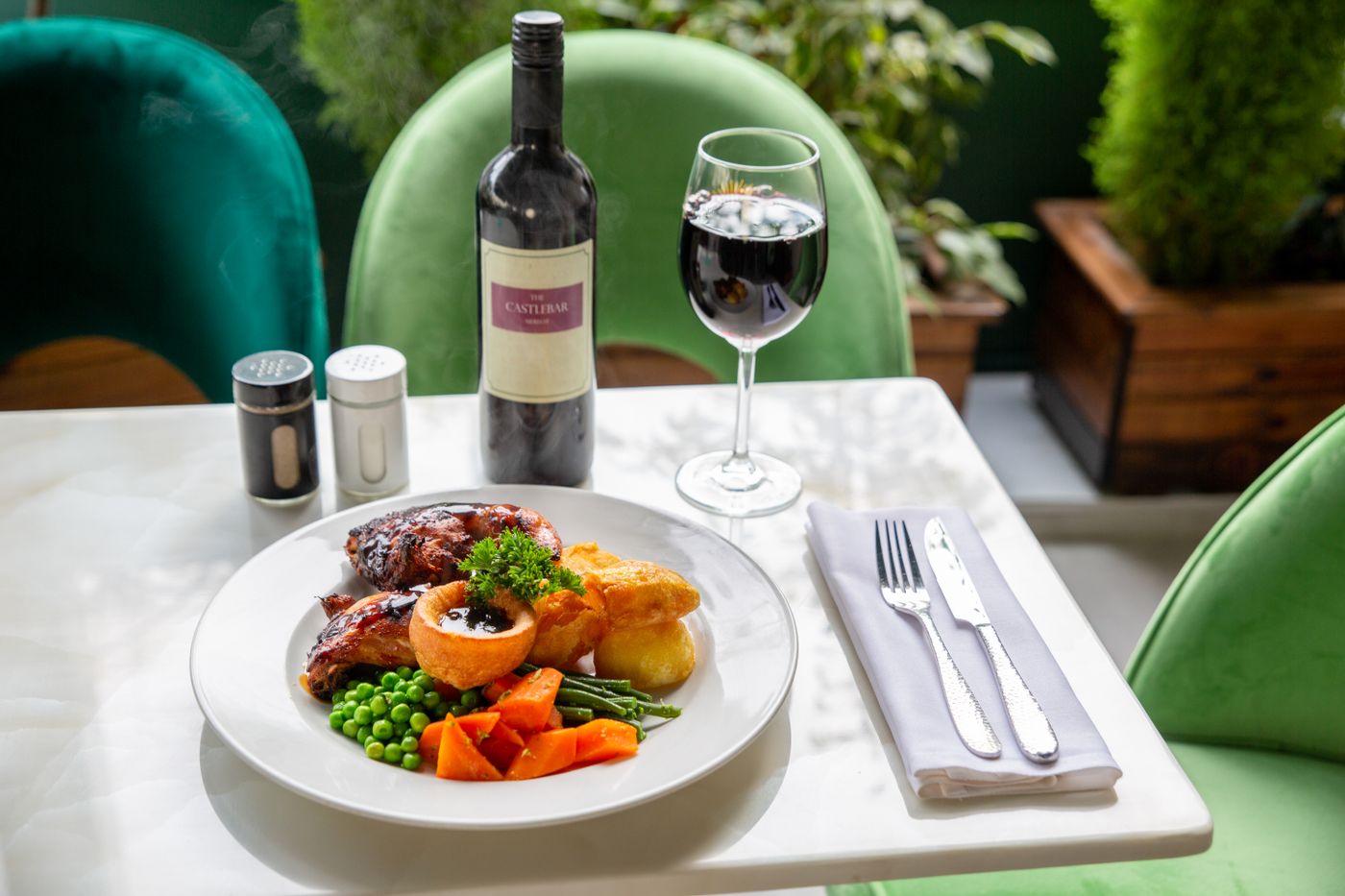
Slow-roasted beef carved pink over a puffed, crisp-edged Yorkshire pudding baked in the very fat that dripped from the joint.
For 6 servings.
No reviews yet
Cooked this? Be the first to tell everyone how it went.
Sign in to rate and review this recipe.
Sign in to suggest corrections and improvements.
Community posts are opinions, not professional advice. Community guidelines
Videos belong to their creators and play on their platform’s terms — Cibora never re-hosts third-party video.
Buy these ingredients
Links open each store’s own site, where you see their live local prices. Our cost figures in the app are estimates only.
Rub the beef with olive oil and pepper; roast at 220°C/425°F for 20 minutes, then lower to 180°C/350°F and continue to your desired doneness.
💡 Pull it 5°C shy of target — it climbs while resting.
Meanwhile, parboil the potato and carrot chunks 8 minutes, drain, rough up the edges, and roast in the hot fat around the beef until deeply golden.
Whisk the Yorkshire pudding flour, eggs, milk and a pinch of salt into a smooth batter; let it rest at room temperature.
Rest the roasted beef under foil for 20 minutes before carving.
💡 Do not skip the rest — the juices need time to redistribute or they end up on the board.
While the beef rests, heat oil in a muffin tin in a very hot oven until smoking, pour in the batter, and bake undisturbed until dramatically puffed and golden.
💡 Never open the oven door early — the puddings collapse instantly if the heat drops.
Simmer the beef stock with the browned bits from the roasting tin and the extra flour to thicken into a gravy.
Carve the beef thinly and serve with the potatoes, carrots, Yorkshire puddings and gravy.
The Sunday roast has anchored British family lunches for generations, traditionally eaten after church and shared across the whole afternoon. Yorkshire pudding began as a way to catch dripping fat under the roasting spit and grew into its own crisp, custardy staple served alongside.
No suggestions yet. Spotted a wrong quantity, a missing step, or a better technique? Suggest it — accepted changes join the recipe’s version history.
Sign in to join the discussion. Reading is open to everyone.
Nothing here yet — questions about technique, timing, and substitutions all welcome.