🇯🇵 JapanCatalog recipe
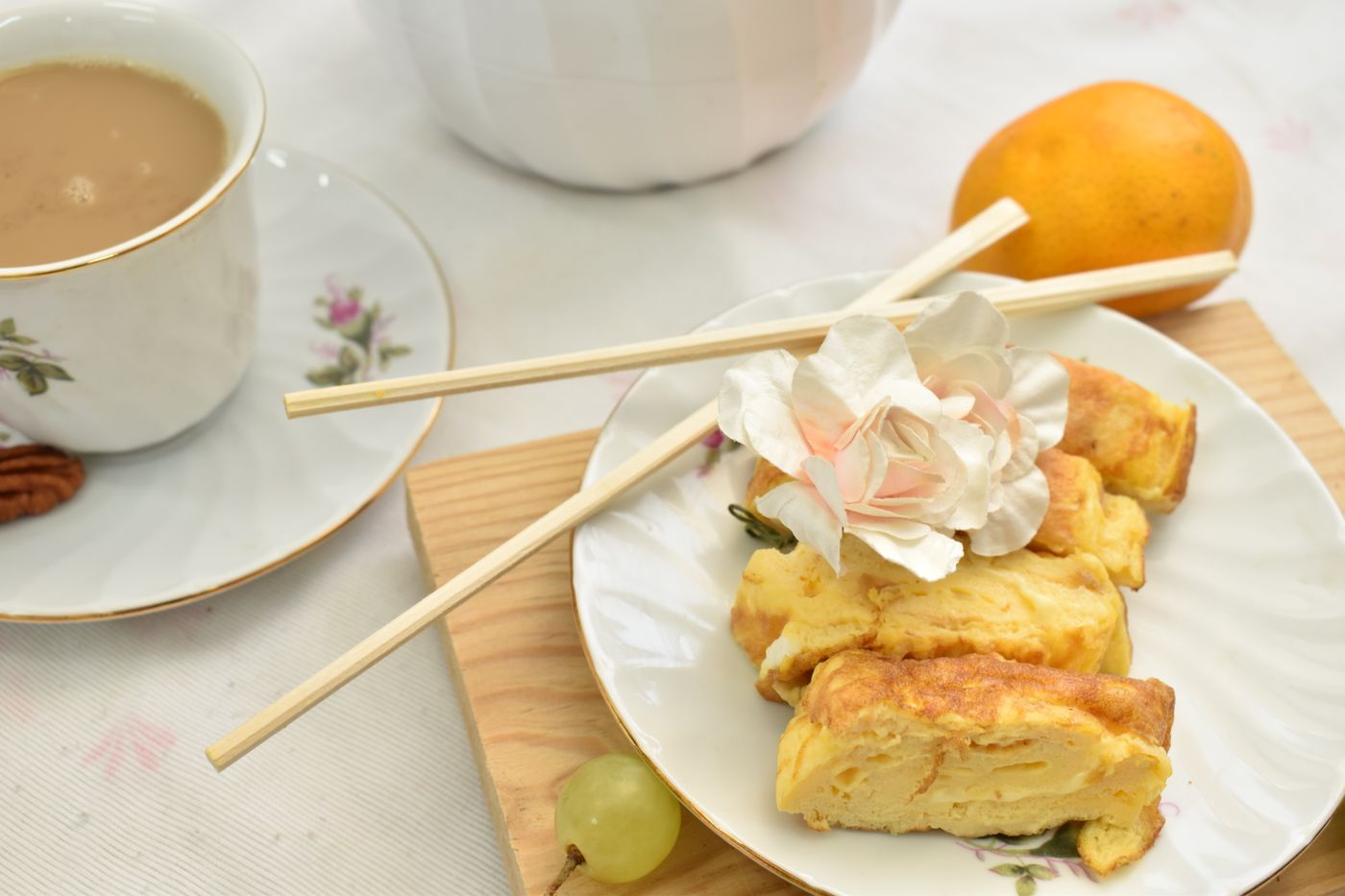
A sweet-savory rolled omelette built up layer by delicate layer, sliced to show its golden spiral.
For 2 servings.
Buy these ingredients
Links open each store’s own site, where you see their live local prices. Our cost figures in the app are estimates only.
No reviews yet
Cooked this? Be the first to tell everyone how it went.
Sign in to rate and review this recipe.
Sign in to suggest corrections and improvements.
Community posts are opinions, not professional advice. Community guidelines
Videos belong to their creators and play on their platform’s terms — Cibora never re-hosts third-party video.
Beat the eggs with the dashi, sugar, soy sauce and a pinch of salt, cutting through the whites without whipping in air.
💡 Pour the mixture through a sieve for a perfectly even, silky omelette.
Heat the pan over medium heat and wipe it with an oiled paper towel — you want a film, not a puddle.
Pour in a thin layer of egg. When it is just set on top, roll it toward you with chopsticks and push the roll to the far end.
Oil the empty pan again, pour in another thin layer, lifting the roll so egg runs underneath, and roll again around the first.
💡 Each new layer should still be slightly wet when you roll — that is the glue between layers.
Repeat until the egg is used up and the roll is plump, 3 or 4 layers in all.
Rest the roll seam-down for 2 minutes, then slice thickly and serve warm or at room temperature.
Tamagoyaki is the omelette of the Japanese breakfast tray and the bento box, rolled in a dedicated rectangular pan that most Japanese kitchens own. Sushi masters serve it as the final course, and an apprentice's tamagoyaki was traditionally the test of whether their fundamentals were sound.
No suggestions yet. Spotted a wrong quantity, a missing step, or a better technique? Suggest it — accepted changes join the recipe’s version history.
Sign in to join the discussion. Reading is open to everyone.
Nothing here yet — questions about technique, timing, and substitutions all welcome.