🇬🇭 GhanaCatalog recipe · Tamale
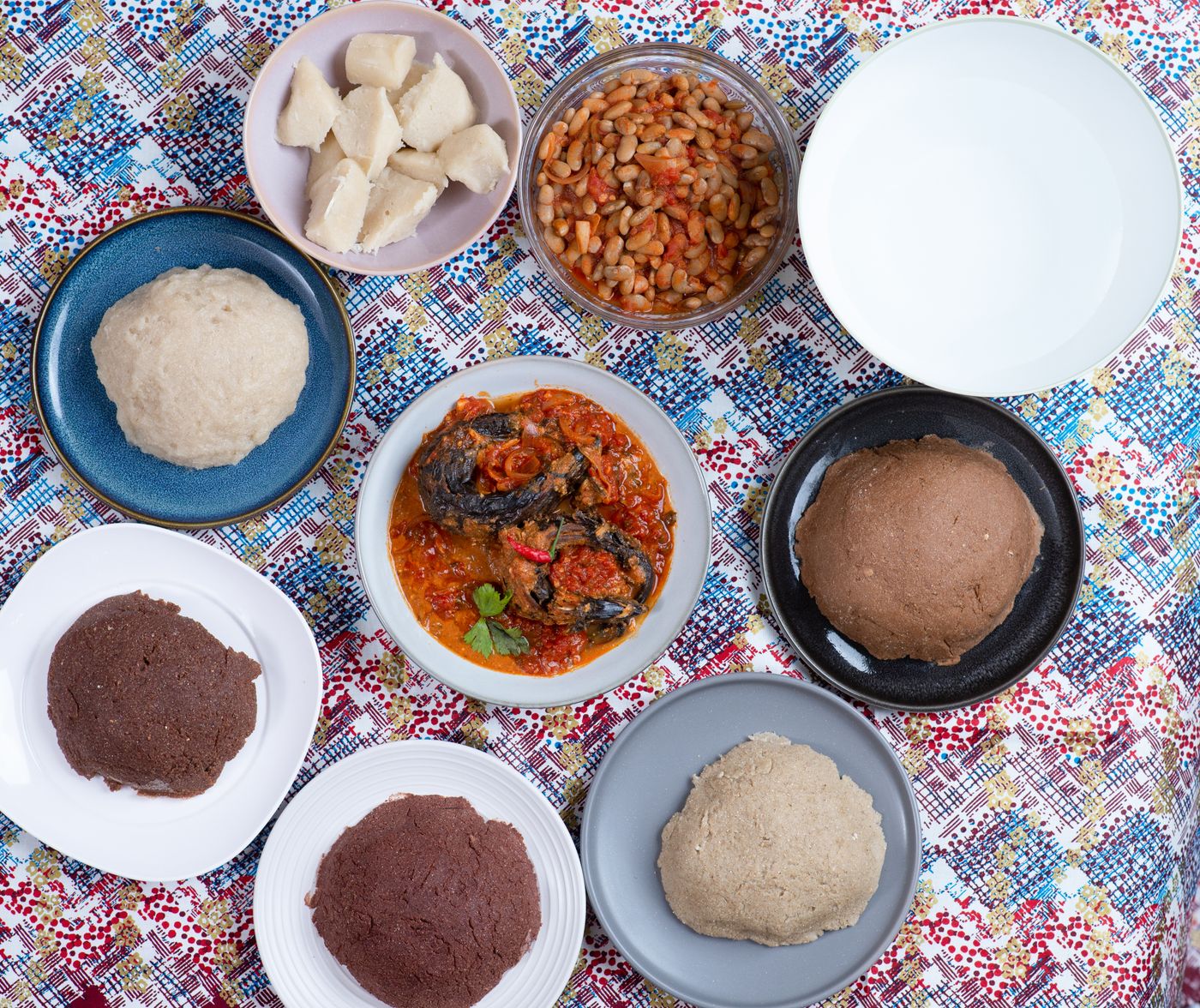
The north's silky millet-corn swallow with slippery jute-leaf soup — the dish Tamale swears by and the south respectfully orders.
How hard is it
Nothing to juggle — one thing at a time.
For 4 servings.
No reviews yet
Cooked this? Be the first to tell everyone how it went.
Sign in to rate and review this recipe.
Sign in to suggest corrections and improvements.
Community posts are opinions, not professional advice. Community guidelines
Videos belong to their creators and play on their platform’s terms — Cibora never re-hosts third-party video.
Buy these ingredients
Links open each store’s own site, where you see their live local prices. Our cost figures in the app are estimates only.
Put the beef in a pot with the onion, scotch bonnet, bouillon cube and enough water to cover; bring to a boil, then reduce to a simmer.
Cook until the beef is fork-tender, skimming off any foam, about 40 minutes.
Lift out the beef and set it aside; keep the broth on the heat — this becomes the ayoyo soup base.
Add the jute leaves to the broth and boil briefly, then whisk vigorously until the soup turns glossy and starts to 'draw' (goes slightly slippery).
💡 No jute leaf? The spinach-and-okra swap noted in the ingredients gives a similar drawing texture.
Return the beef to the soup and keep it warm over low heat while you make the tuo.
Whisk a little of the cornmeal with cold water to a thin, lump-free slurry, then stir it into a separate pot of boiling water.
Beat in the remaining cornmeal and the millet flour a little at a time, working out any lumps, until the mash is soft, smooth and barely holds its shape.
💡 Tuo zaafi is softer than banku — it should slump slowly off the spoon.
Serve the warm tuo in a bowl with the ayoyo soup and meat ladled generously over the top.
Tuo zaafi ('very hot tuo') is Northern Ghana's daily bread, softer than banku and eaten with green ayoyo soup and meat. Hausa in origin, it stretches across the Sahel — every border changes the grind, never the ritual.
No suggestions yet. Spotted a wrong quantity, a missing step, or a better technique? Suggest it — accepted changes join the recipe’s version history.
Sign in to join the discussion. Reading is open to everyone.
Nothing here yet — questions about technique, timing, and substitutions all welcome.