🇧🇷 BrazilCatalog recipe
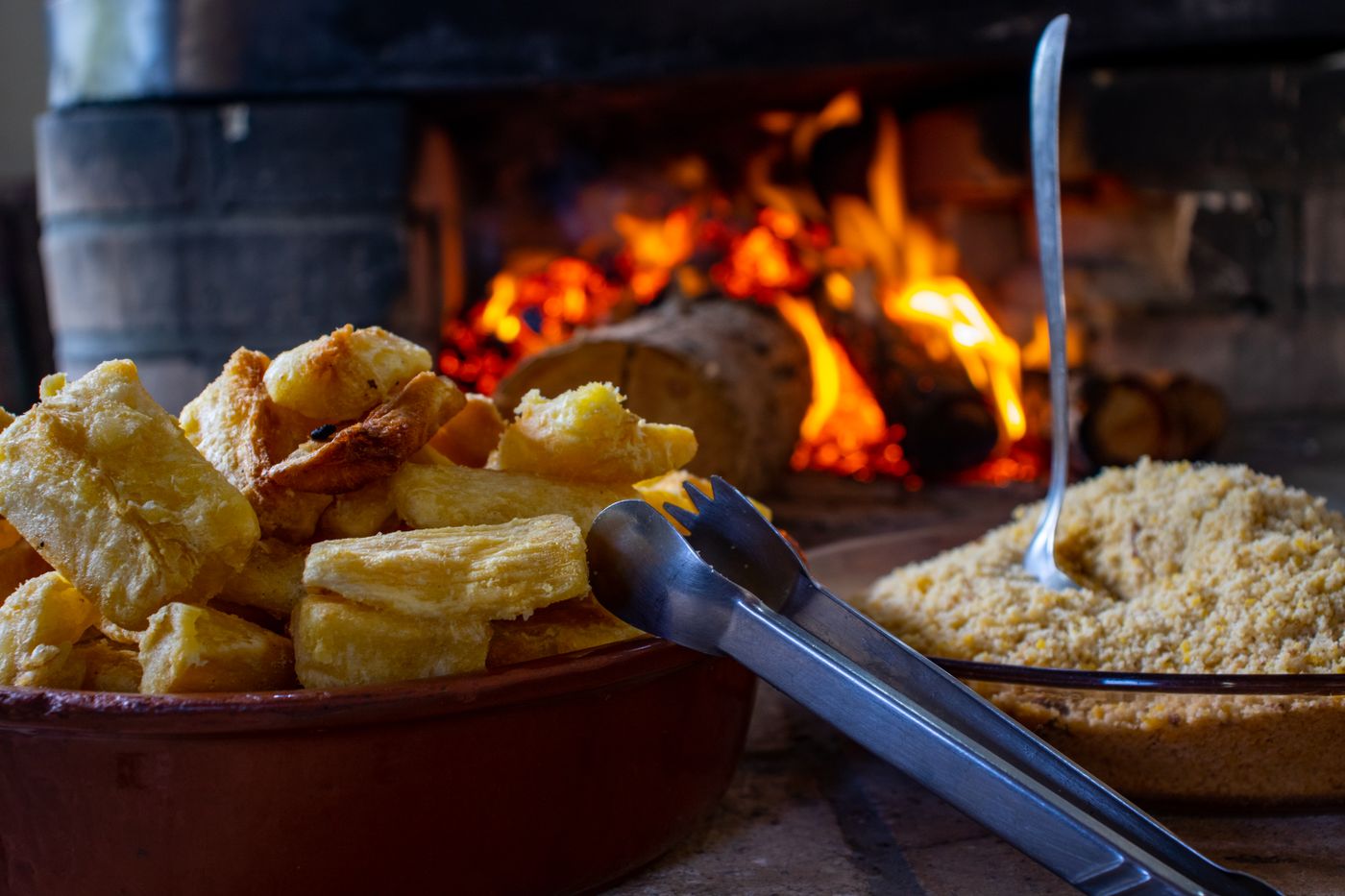
Toasted cassava flour tumbled with butter, bacon, onion and egg until golden and crunchy — the essential scatter over feijoada, rice and beans.
How hard is it
Nothing to juggle — one thing at a time. On the table in 25 minutes.
Folding, not stirring — keeps the air in.
For 6 servings.
No reviews yet
Cooked this? Be the first to tell everyone how it went.
Sign in to rate and review this recipe.
Sign in to suggest corrections and improvements.
Community posts are opinions, not professional advice. Community guidelines
Videos belong to their creators and play on their platform’s terms — Cibora never re-hosts third-party video.
Buy these ingredients
Links open each store’s own site, where you see their live local prices. Our cost figures in the app are estimates only.
Fry the bacon in a large dry pan over medium heat until crisp and its fat has rendered, about 5 minutes.
Add the butter, onion and garlic and cook until the onion is soft and golden at the edges.
Push everything aside, pour the beaten eggs into the empty half and scramble them into small curds.
Rain in the cassava flour, stirring to coat every grain in the fat, and toast, stirring often, until nutty and pale gold, 5–7 minutes.
💡 Cassava flour goes from toasted to scorched quickly — trust your nose and keep it moving.
Season with salt and fold in the parsley.
💡 Farofa should be loose and sandy, not greasy — add a spoonful more flour if it clumps.
Serve warm or at room temperature, spooned generously over feijoada, rice and beans, or grilled meat.
Farofa is Indigenous Brazil on the modern table: cassava flour, the ancient staple, toasted the way native peoples always preserved it, later enriched with Portuguese butter and African-influenced additions. Brazilians spoon it over practically everything, and a barbecue without farofa is considered incomplete on principle.
No suggestions yet. Spotted a wrong quantity, a missing step, or a better technique? Suggest it — accepted changes join the recipe’s version history.
Sign in to join the discussion. Reading is open to everyone.
Nothing here yet — questions about technique, timing, and substitutions all welcome.