🇰🇷 South KoreaCatalog recipe
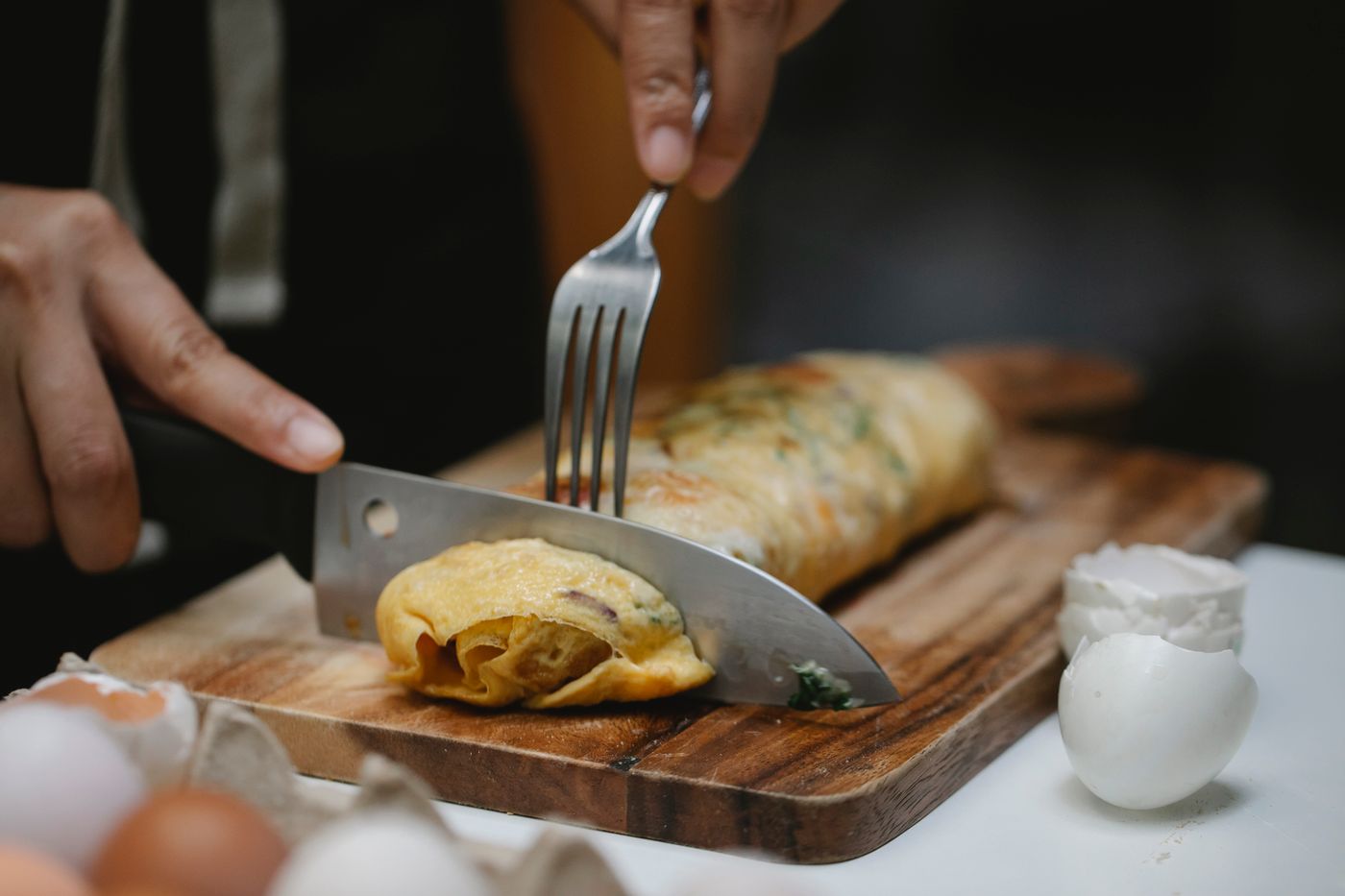
Thin layers of egg studded with carrot and spring onion, rolled tight in the pan into a neat log and sliced into pinwheels.
For 4 servings.
No reviews yet
Cooked this? Be the first to tell everyone how it went.
Sign in to rate and review this recipe.
Sign in to suggest corrections and improvements.
Community posts are opinions, not professional advice. Community guidelines
Videos belong to their creators and play on their platform’s terms — Cibora never re-hosts third-party video.
Buy these ingredients
Links open each store’s own site, where you see their live local prices. Our cost figures in the app are estimates only.
Whisk the eggs with the salt until smooth but not foamy, then stir in the carrot and spring onion.
💡 Straining the beaten egg through a sieve first gives an extra-smooth roll, but it's skippable on a weeknight.
Heat a lightly oiled nonstick rectangular pan over medium-low heat.
Pour in a thin layer of the egg mixture, just enough to coat the base, and let it set about 30 seconds.
Starting from one edge, roll the just-set egg into a log with chopsticks or a spatula, then push it to the far side of the pan.
Pour in another thin layer, lifting the rolled log so the raw egg runs underneath it, then roll again once set. Repeat until the egg is used up.
💡 Keep the heat low — too hot and each new layer sets before it can bond to the roll.
Slide the finished roll onto a cutting board and shape it into a tight log with a bamboo mat or folded paper towel while still warm. Rest 2 minutes.
Slice into pinwheels and serve warm or at room temperature.
Gyeran mari is a fixture of dosirak, the packed lunchboxes Korean parents send to school and work, built by pouring egg into a rectangular pan in thin layers and rolling each one around the last with chopsticks. A tightly rolled, evenly layered log is considered a small mark of a careful cook, and the sliced pinwheels are judged on how neat their spiral looks. It travels well cold, which is much of its appeal for lunchboxes.
No suggestions yet. Spotted a wrong quantity, a missing step, or a better technique? Suggest it — accepted changes join the recipe’s version history.
Sign in to join the discussion. Reading is open to everyone.
Nothing here yet — questions about technique, timing, and substitutions all welcome.