π°π· South KoreaCatalog recipe
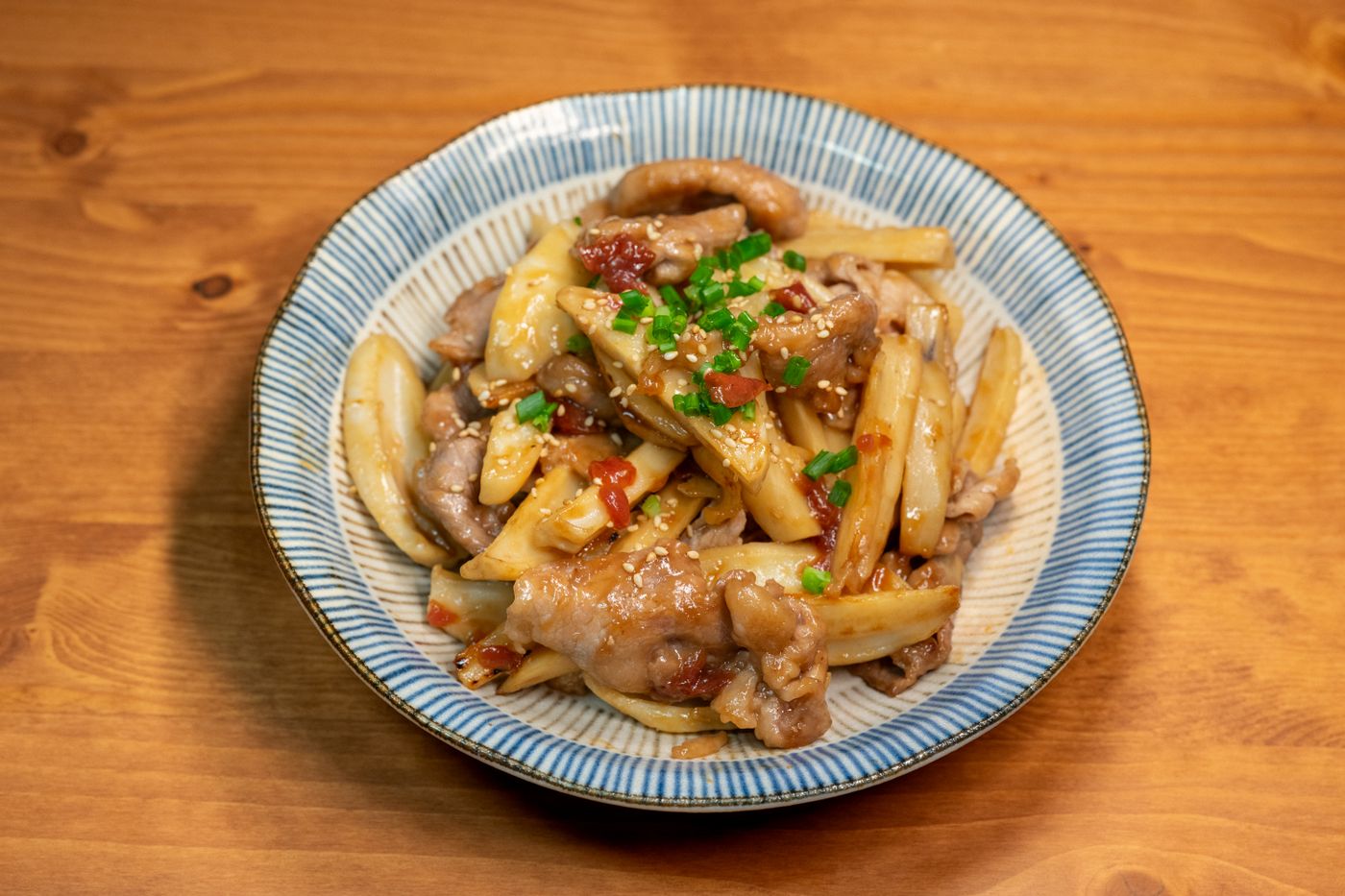
Thin pork chop seared hard in a fierce gochujang-garlic glaze with onion and cabbage, the blackened edges the entire point of the dish.
For 4 servings.
No reviews yet
Cooked this? Be the first to tell everyone how it went.
Sign in to rate and review this recipe.
Sign in to suggest corrections and improvements.
Community posts are opinions, not professional advice. Community guidelines
Videos belong to their creators and play on their platformβs terms β Cibora never re-hosts third-party video.
Buy these ingredients
Links open each storeβs own site, where you see their live local prices. Our cost figures in the app are estimates only.
Whisk the gochujang, gochugaru, soy sauce, sugar, garlic and ginger into a thick marinade.
Toss the pork through the marinade, cover, and marinate at least 20 minutes, or overnight in the fridge.
Heat the vegetable oil in a large skillet or wok over high heat until it just starts to smoke.
Add the pork in a single layer and let it sit undisturbed 2 minutes before tossing, so the edges truly char instead of steam.
π‘ Resist stirring right away β the blackened edge is the entire point of jeyuk bokkeum.
Add the onion and cabbage and stir-fry 4 minutes more, until the pork is cooked through and the cabbage wilts but keeps its crunch.
Drizzle in the sesame oil, toss once, and scatter with spring onion and sesame seeds.
Serve immediately with rice and lettuce leaves for wrapping.
Jeyuk bokkeum is pork's answer to bulgogi, built around gochujang's heat instead of soy's sweetness, and traditionally cooked on a domed cast-iron plate set into a tabletop burner so the meat blackens rather than stews in its own juice. It became a staple of budget lunch counters and the neighborhoods around US military bases, where American soldiers encountered it as a distinctly spicier alternative to bulgogi. Regulars usually order it for the char, not the sauce.
No suggestions yet. Spotted a wrong quantity, a missing step, or a better technique? Suggest it β accepted changes join the recipeβs version history.
Sign in to join the discussion. Reading is open to everyone.
Nothing here yet β questions about technique, timing, and substitutions all welcome.