🇳🇴 NorwayCatalog recipe · Vestlandet
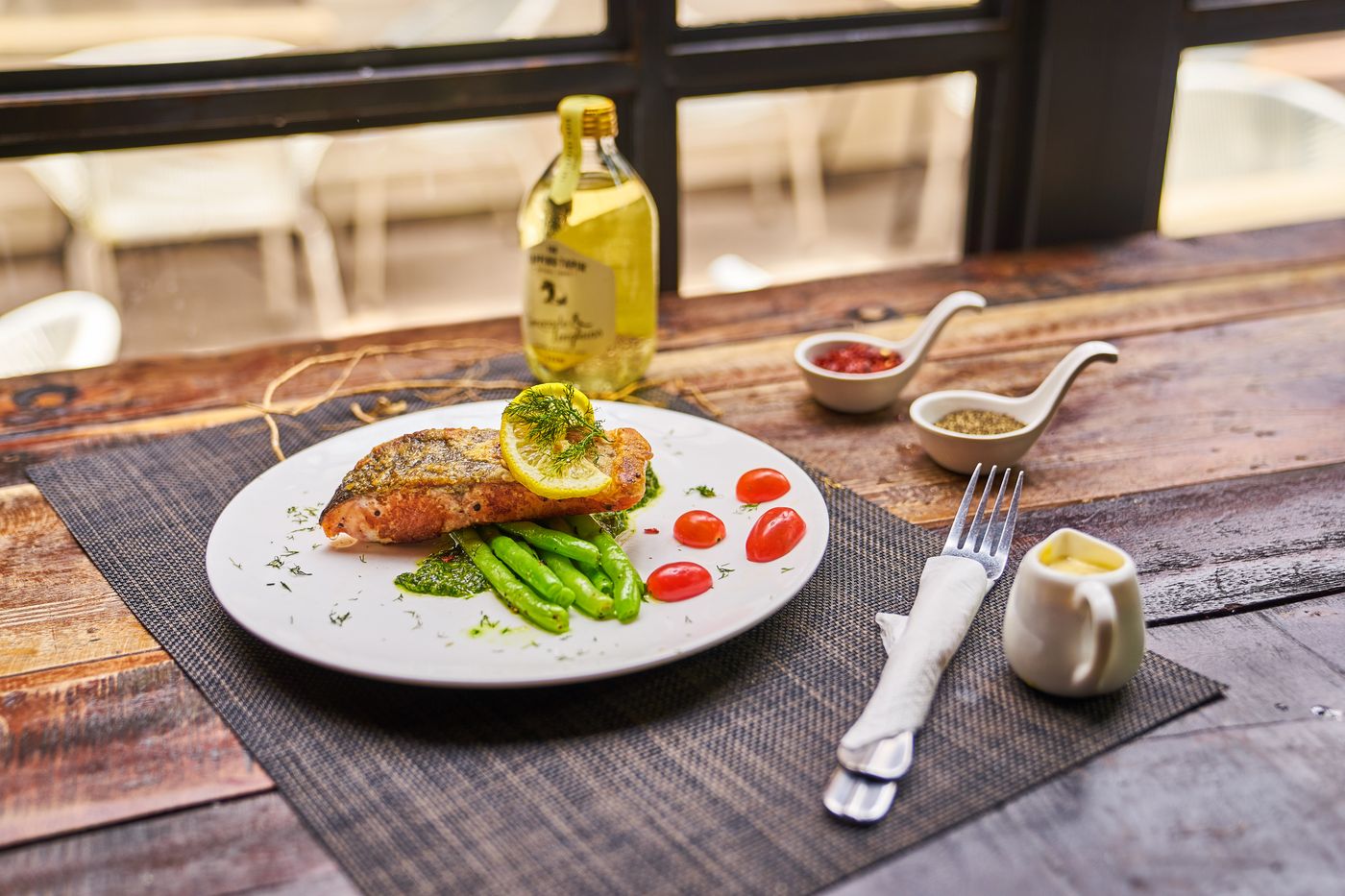
Salmon fillets roasted until just set, plated over roasted potatoes with a cool, mustard-sharp dill sauce spooned generously across the top.
For 4 servings.
No reviews yet
Cooked this? Be the first to tell everyone how it went.
Sign in to rate and review this recipe.
Sign in to suggest corrections and improvements.
Community posts are opinions, not professional advice. Community guidelines
Videos belong to their creators and play on their platform’s terms — Cibora never re-hosts third-party video.
Buy these ingredients
Links open each store’s own site, where you see their live local prices. Our cost figures in the app are estimates only.
Toss the halved potatoes with olive oil and a pinch of salt; roast at 220°C for 15 minutes.
Meanwhile, whisk the sour cream, dijon mustard, chopped dill and a squeeze of lemon juice into a smooth sauce; set aside.
Push the potatoes to one side of the tray, dot the salmon fillets with butter, and season.
Return to the oven and roast until the salmon is just opaque and flakes with light pressure, 12 to 14 minutes.
💡 Pull it while the center still looks slightly glassy — it keeps cooking off the heat and dry salmon doesn't recover.
Rest the salmon 2 minutes.
Plate the salmon and potatoes, spoon the mustard-dill sauce over the top, and finish with extra dill and a lemon wedge.
Norway is the world's largest producer of farmed Atlantic salmon, and oven-roasted fillets with potatoes are a weeknight staple in coastal and inland homes alike. The mustard-and-dill sauce echoes the flavors used for cured salmon, gravlaks, a pairing Norwegians reach for by instinct. The dish reflects how thoroughly salmon has moved from delicacy to everyday protein since fish farming took off along the western fjords in the late twentieth century.
No suggestions yet. Spotted a wrong quantity, a missing step, or a better technique? Suggest it — accepted changes join the recipe’s version history.
Sign in to join the discussion. Reading is open to everyone.
Nothing here yet — questions about technique, timing, and substitutions all welcome.