🇧🇷 BrazilCatalog recipe
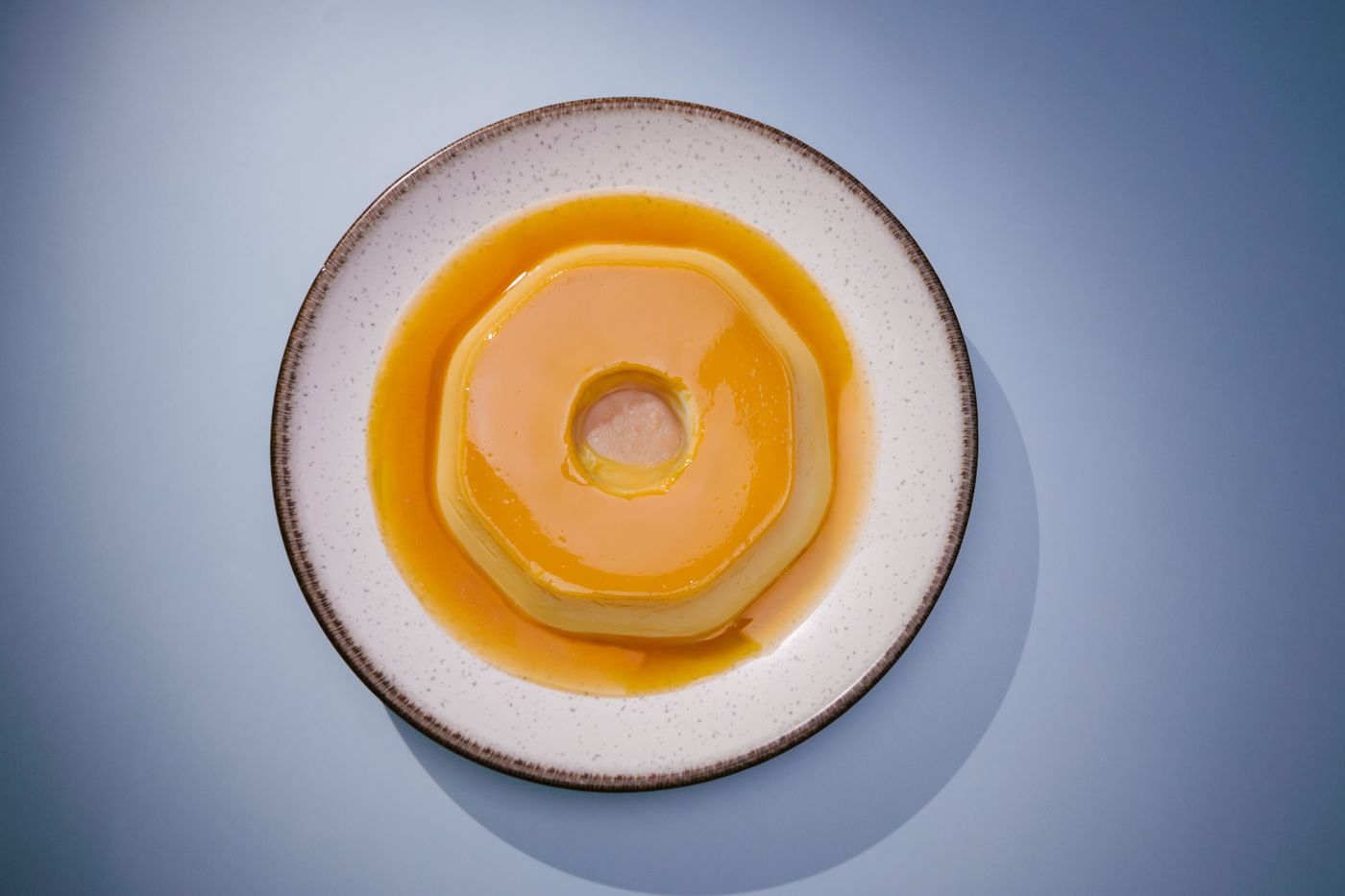
Silky baked custard set over a bittersweet caramel and unmolded to let the sauce pool around it — the dessert nearly every Brazilian household makes for Sunday lunch.
For 8 servings.
No reviews yet
Cooked this? Be the first to tell everyone how it went.
Sign in to rate and review this recipe.
Sign in to suggest corrections and improvements.
Community posts are opinions, not professional advice. Community guidelines
Videos belong to their creators and play on their platform’s terms — Cibora never re-hosts third-party video.
Buy these ingredients
Links open each store’s own site, where you see their live local prices. Our cost figures in the app are estimates only.
Melt the sugar with the water in a dry saucepan over medium heat, swirling the pan occasionally but not stirring, until it turns a deep amber.
💡 Watch it closely near the end — caramel can turn from amber to burnt in under a minute.
Immediately pour the caramel into the mold and tilt it to coat the bottom and partway up the sides before it sets.
Heat the oven to 180°C.
Blend the condensed milk, milk and eggs together until smooth and slightly foamy.
Pour the custard through a sieve into the caramel-coated mold, to catch any bits of egg.
Set the mold in a roasting pan, pour hot water halfway up its sides, and bake until the center jiggles only slightly, about 45 minutes.
💡 The water bath is what keeps the custard silky instead of turning it into sweet scrambled eggs.
Cool to room temperature, then chill at least 4 hours, ideally overnight.
Run a knife around the edge, invert onto a rimmed plate, and let the caramel sauce pool around the pudim before serving.
Built from little more than condensed milk, eggs and regular milk, pudim de leite is the most-repeated dessert in Brazilian home cooking, baked in a water bath until just barely set and always turned out onto a plate so the caramel runs down the sides. Recipes pass down through families more often than they get looked up.
No suggestions yet. Spotted a wrong quantity, a missing step, or a better technique? Suggest it — accepted changes join the recipe’s version history.
Sign in to join the discussion. Reading is open to everyone.
Nothing here yet — questions about technique, timing, and substitutions all welcome.