🇯🇵 JapanCatalog recipe
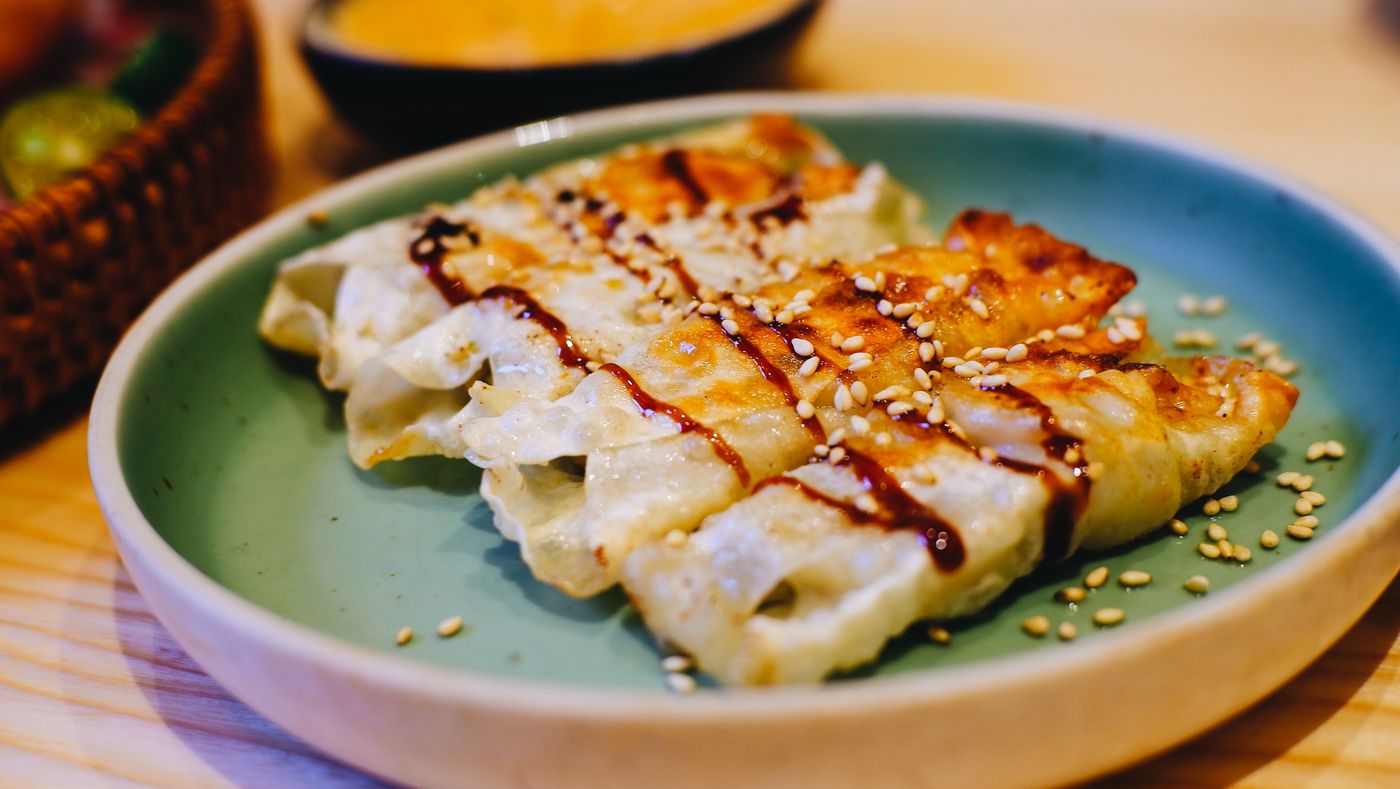
Pan-fried pork and cabbage dumplings with a crackling golden base and a juicy, gingery heart.
How hard is it
Nothing to juggle — one thing at a time.
Folding, not stirring — keeps the air in. Kneading dough by hand.
For 4 servings.
No reviews yet
Cooked this? Be the first to tell everyone how it went.
Sign in to rate and review this recipe.
Sign in to suggest corrections and improvements.
Community posts are opinions, not professional advice. Community guidelines
Videos belong to their creators and play on their platform’s terms — Cibora never re-hosts third-party video.
Buy these ingredients
Links open each store’s own site, where you see their live local prices. Our cost figures in the app are estimates only.
Knead the pork with soy sauce, half the sesame oil, garlic, ginger and a pinch of salt until sticky, then fold in the cabbage and chives.
💡 Kneading the meat first builds the bounce that makes the filling juicy, not crumbly.
Place a teaspoon of filling on a wrapper, wet the edge, and pleat one side against the other into a crescent. Repeat — a rhythm develops fast.
💡 Overfilling is the classic beginner's leak; less filling, tighter pleats.
Heat vegetable oil in a lidded pan over medium-high heat and arrange the gyoza flat-side down in close rows.
Fry 2 minutes until the bases are golden, then pour in the water, cover immediately, and steam for 5 minutes.
Uncover, drizzle the remaining sesame oil around the edges, and cook until the water is gone and the bases crackle, about 2 minutes.
Serve base-up with a dipping sauce of soy sauce and rice vinegar.
Gyoza crossed to Japan from northern China in the 20th century and were reborn: thinner skins, more garlic, and the signature fry-then-steam method that gives one crisp face and one tender one. The city of Utsunomiya proudly calls itself Japan's gyoza capital, with entire streets devoted to them.
No suggestions yet. Spotted a wrong quantity, a missing step, or a better technique? Suggest it — accepted changes join the recipe’s version history.
Sign in to join the discussion. Reading is open to everyone.
Nothing here yet — questions about technique, timing, and substitutions all welcome.