π―π΅ JapanCatalog recipe
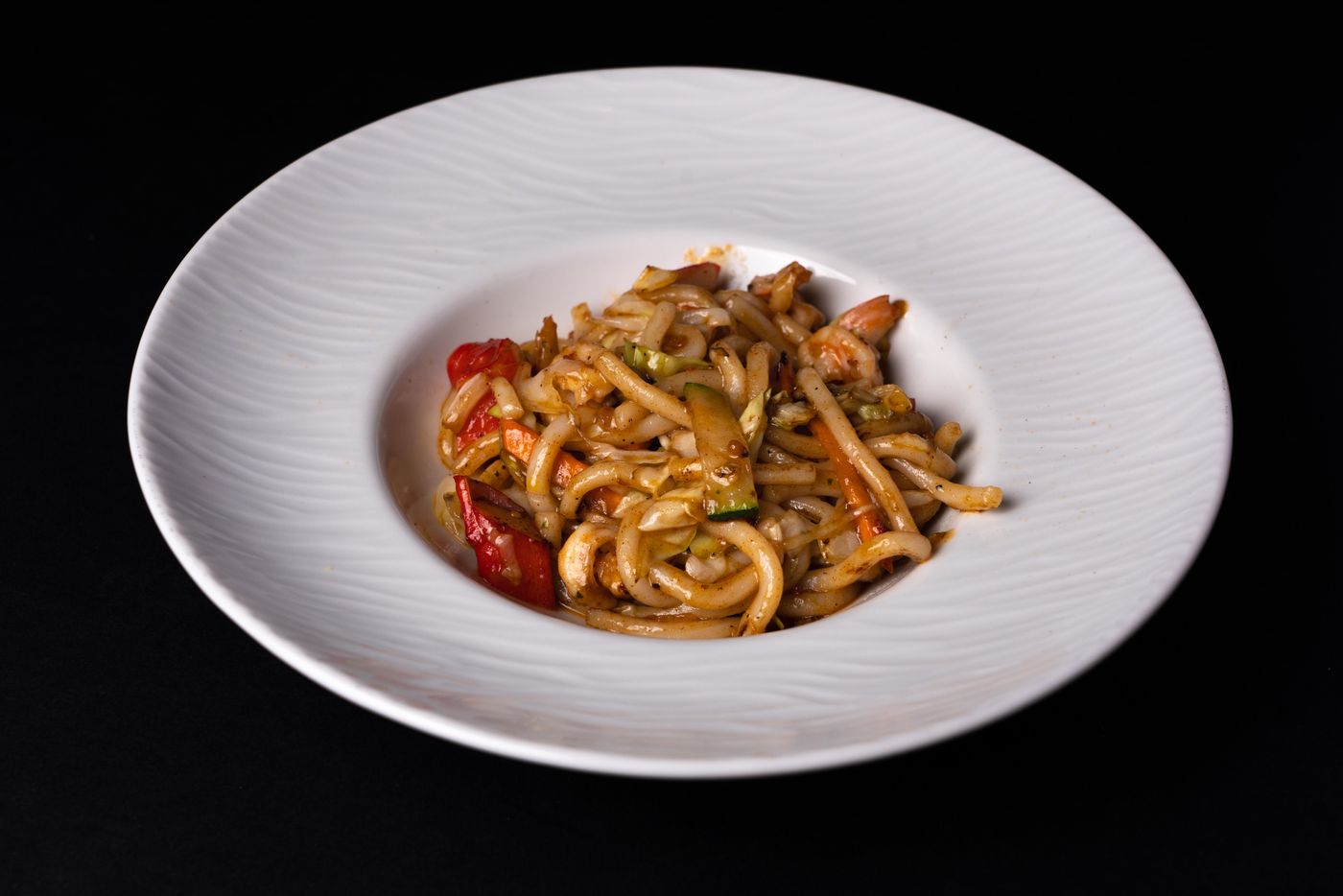
Thick udon seared hot and fast with pork, cabbage and carrot in a smoky soy-Worcestershire glaze β ramen's stir-fried, saucier cousin.
For 4 servings.
No reviews yet
Cooked this? Be the first to tell everyone how it went.
Sign in to rate and review this recipe.
Sign in to suggest corrections and improvements.
Community posts are opinions, not professional advice. Community guidelines
Videos belong to their creators and play on their platformβs terms β Cibora never re-hosts third-party video.
Buy these ingredients
Links open each storeβs own site, where you see their live local prices. Our cost figures in the app are estimates only.
Loosen the udon under warm running water, or per the package, so the strands separate; drain well.
Heat half the oil in a wok or large skillet over high heat and stir-fry the pork until browned and just cooked through, about 4 minutes; remove to a plate.
Add the remaining oil, then the onion, carrot and cabbage, and stir-fry 3 minutes until softened but still with bite.
Push the vegetables aside, add the garlic to the cleared space, and stir 30 seconds until fragrant.
Return the noodles and pork to the pan, pour in the soy sauce, worcestershire sauce and sugar, and toss vigorously until every strand is coated and charred at the edges, about 3 minutes.
π‘ Keep the heat high and let the noodles sit against the pan a few seconds between tosses β that's what gives yaki udon its smoky edge.
Pile into bowls and shower with bonito flakes, which curl and dance in the residual heat.
Yaki udon is generally traced to a Kitakyushu noodle shop in the years after the Second World War, when the cook substituted thick udon for the thin yakisoba noodles that were scarce at the time. It kept yakisoba's char and tangy, Worcestershire-leaning sauce but gained a chewier bite, and it has since become its own standard on izakaya menus nationwide.
No suggestions yet. Spotted a wrong quantity, a missing step, or a better technique? Suggest it β accepted changes join the recipeβs version history.
Sign in to join the discussion. Reading is open to everyone.
Nothing here yet β questions about technique, timing, and substitutions all welcome.